




Used car sales have soared to become a 20 trillion-won market, about twice bigger than market for new cars
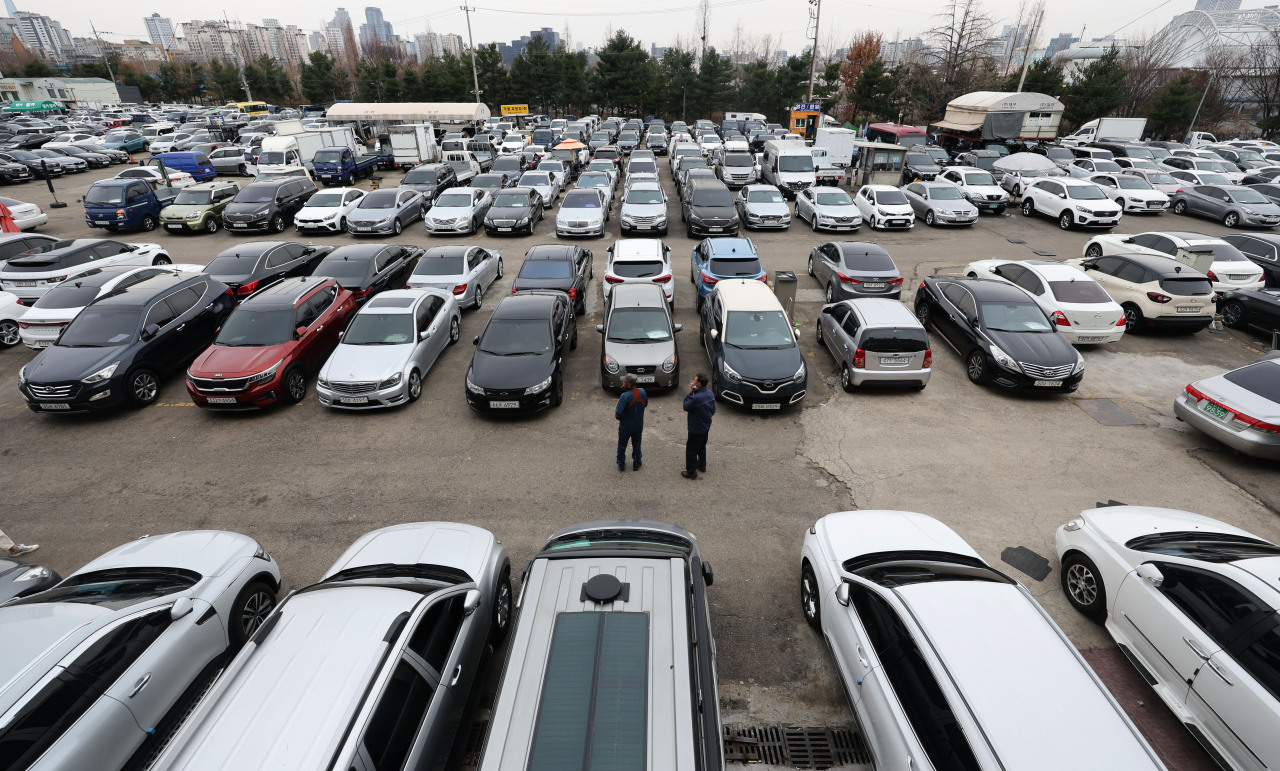
After the Ministry of SMEs and Startups greenlighted the large automotive companies’ entry to the secondhand car market, carmakers here have been quick to announce their plans to launch secondhand services within the year.
Their entry could bring huge change to the used car market here, which has been protected by the government until recently for microenterprises.
Lotte Rental, which operates a rent-a-car business, announced Friday that it would also enter the used car market in the second half of this year, selling vehicles it had rented out for three to five years.
Hyundai Motor will be the first to launch the used car service, as the carmaker made it official on March 7 that it would enter the market by selling only high-quality certified cars that have been driven less than 100,000 kilometers and owned for less than five years.
Hyundai said it would aim to sell 50,000 used cars by the year-end.
All cars to be sold will go through some 200 performance tests and maintenance services provided by the automaker and be given the “Certified Pre-Owned” mark, Hyundai said.
Sales will be conducted via mobile application and virtual showroom. It has also set the limit of its market share to 2.5 percent this year, 3.6 percent next year and 5.1 percent in 2024, as part of efforts to coexist with small and mid-sized used car dealerships.
Some market insiders said that with large carmakers establishing high-standard and detailed criteria to evaluate and test secondhand cars, the market will gain more trust and credibility.
“When a company conducts a quality test based on some 200 criteria, even minor defects will be discovered, which will alleviate the widespread perception that secondhand cars are of poor quality,” said an industry insider who requested anonymity.
With online-based sales channels attracting clients, the market forecasts a boost in customer satisfaction, which the other small and mid-sized used car dealerships will also benefit from.
According to Hyundai Motor, it will offer high-resolution photos to help customers evaluate the car they want to purchase. The carmaker plans to offer virtual test-drives in which potential buyers would also be able to hear the engine sound. At an unmanned delivery tower, which will be set up across the country, customers can simply test-drive the vehicle there and purchase the car instantly via the app.
“With large companies entering the secondhand car business, there will be a lot of advanced, efficient systems introduced to the market, which will be shared by other market players and increase the overall consumer trust to enlarge the pie,” said Lee Ho-geun, professor of automotive engineering from Daeduk University.
According to industry data, the country’s total transaction volume of secondhand cars is around 2.8 million annually. Of them, some 1.3 million cars are sold via dealerships.
Korea’s used car market was worth 20 trillion won ($16.5 billion) in terms of the transaction amount, about twice bigger in size than the market for new cars.
Last week, a deliberation committee under the Ministry of SMEs and Startups decided not to designate secondhand vehicle sales as one of the “livelihood businesses” that must be reserved for small enterprises and startups. The used car business was first included in 2013 in the category from which large companies are banned.
Last year, Hyundai and Kia registered for B2C used car business licenses, but the government had put a halt to the business launch amid strong objection from existing players, mostly small and mid-sized dealerships.

