



Combined commitments could reach 10 trillion won as officials prepare for possible deployment
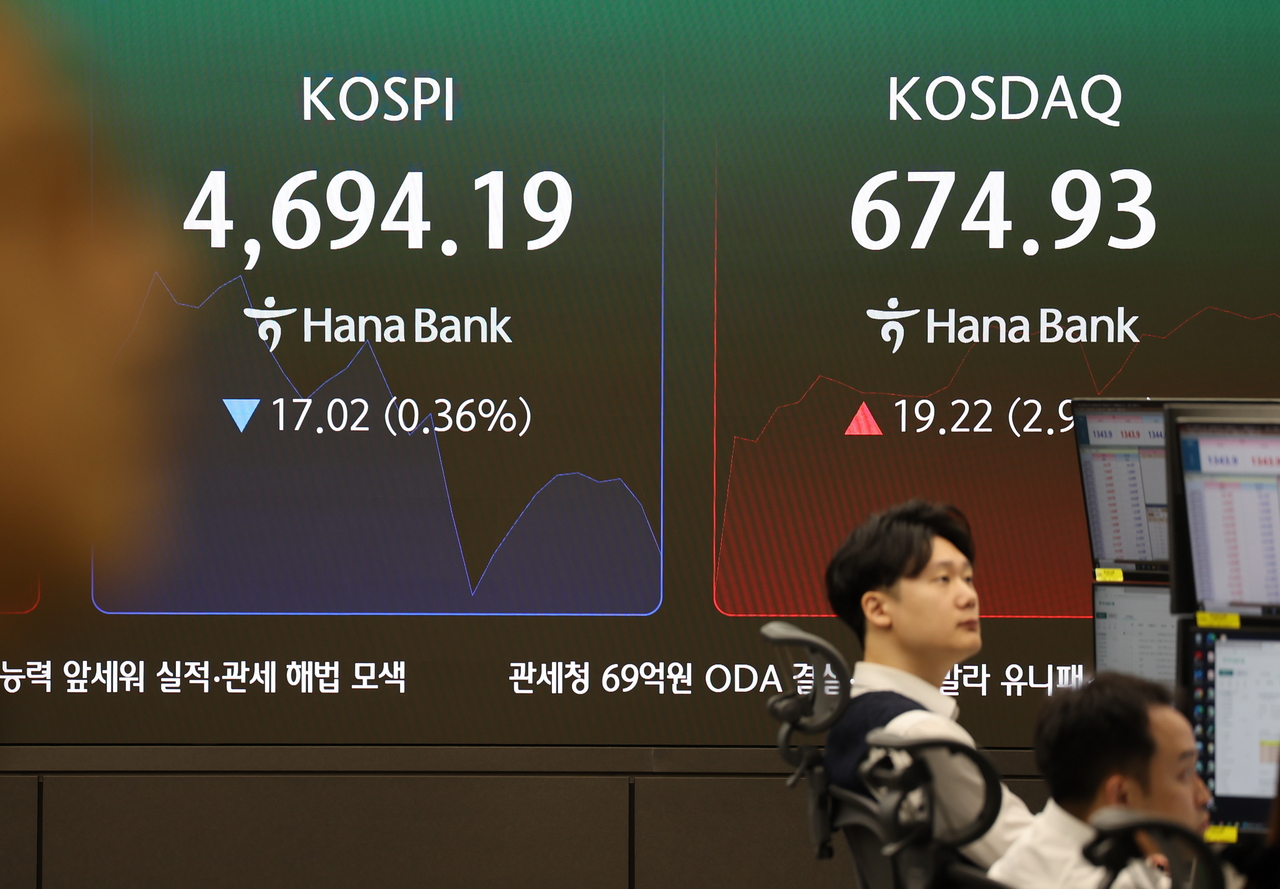
South Korea's five largest financial groups are considering more than doubling their combined commitments to a stock market stabilization fund to as much as 10 trillion won ($7.47 billion), as authorities prepare for its possible deployment amid sharp swings in equities.
KB, Shinhan, Hana, Woori and NH NongHyup are each weighing pledges of up to 2 trillion won, according to industry reports Sunday. Together, they have committed 4.7 trillion won. If all five raise their pledges to that level, the fund's total commitments would climb from 10.76 trillion won to 16.06 trillion won. Additional pledges from other participants could push up the total to 20 trillion won.
Any increase remains under discussion. Korea Development Bank, the fund's largest contributor, has reportedly asked participating firms whether they could meet their existing pledges and how much more they could commit. The fund's investment management committee met Sunday to discuss drawing on existing pledges, while financial authorities and the heads of major financial groups are set to discuss a possible expansion Monday.
The fund, established in 2020, has never bought stocks, including when authorities considered deploying it during the 2022 Legoland crisis. Any purchases would mark the first intervention of this kind since the 2008 global financial crisis.
How much each institution should contribute remains an open question. An official from one of the major banking groups said that while the group supports expanding the fund to stabilize markets, any increase should reflect market conditions and each contributor's financial capacity.
Another banking official called for broader participation, saying, "Banks need to play a role in stabilizing the market, but because the fund is intended to support the capital market, the burden should be shared more broadly across the financial sector rather than concentrated on one industry."
The existing 1 trillion won pledges from KB, Shinhan, Hana and Woori were made through their banks. NH NongHyup's 700 billion won commitment is split among its bank, life insurer, brokerage and nonlife insurer. How additional pledges would be divided among subsidiaries is not yet decided.
A larger commitment could weigh on banks' capital ratios even before they pay in cash, because a portion of an undrawn pledge counts toward risk-weighted assets. Financial groups are expected to ask regulators at Monday's meeting to ease that burden. They have also warned that higher commitments could limit their lending capacity and shareholder returns.
Citi Research sees the fund expanding to between 20 trillion won and 40 trillion won as Korea's equity market has grown since 2020.
In a report released Thursday, Citi economist Kim Jin-wook said the initial 10.76 trillion won commitment equaled about 0.94 percent of the combined market value of Kospi and Kosdaq stocks at the time. A fund of 20 trillion won to 40 trillion won would amount to roughly 0.47 percent to 0.95 percent of that market's value as of today.
Kim said a government capital injection into KDB could be considered if the fund expands to the upper end of the range. "The government would have more than enough fiscal capacity to provide support, given chip-driven excess tax revenue for 2026," he wrote.
With new commitments expected to take one to two months to clear internal reviews and board approvals, Kim said authorities could collect 1 trillion won to 2 trillion won from existing pledges for possible investment as early as December, before the expansion is finalized.
"A larger commitment and earlier timing could raise the efficacy of the signaling effects, in our view," Kim said.
By Choi Ji-won (jwc@heraldcorp.com)

