




Chinese brands challenge Korean TV giants with aggressively priced big screens, advanced display technology
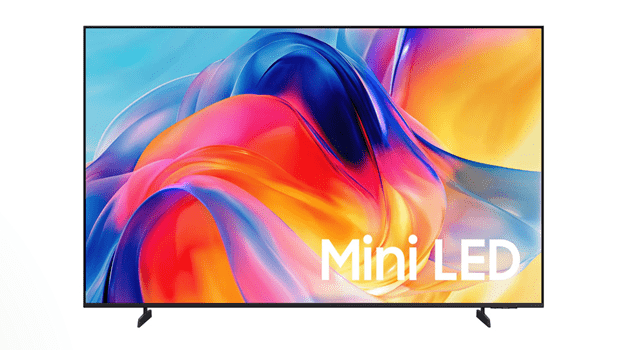
Chinese TV-makers are pushing into the premium market with aggressively priced, large-screen mini-LED TVs, prompting Samsung Electronics and LG Electronics to expand their lineups as global TV demand weakens.
TCL, for instance, is offering its 98-inch QM8L mini-LED TV for $2,999.99 on its official US website, half its listed price of $5,999.99. The steep discount underscores how Chinese brands are making ultralarge screens more affordable as they seek a bigger share of the high-end market.
Their growing presence is also reflected in global shipment figures.
According to market researcher TrendForce, worldwide TV shipments fell 3.6 percent on-year to 47.94 million units in the third quarter. Samsung retained the top spot with 8.4 million units, down 1.9 percent, while second-place TCL saw shipments rise 1.1 percent to 7.48 million units, narrowing the gap to 920,000 units.
Hisense followed closely with 7.45 million units, down 2.7 percent on-year, while LG ranked fourth with 6.2 million units, up 6.9 percent. Combined TV shipments across all price tiers reached 14.93 million units for TCL and Hisense, surpassing Samsung and LG’s combined 14.6 million.
The Chinese brands are also making headway beyond their traditional stronghold in budget TVs.
TrendForce said TCL recorded double-digit revenue growth in North America, Europe and emerging markets, driven by its expanding range of large-screen and mini-LED models.
Hisense, meanwhile, reported a 77.4 percent on-year jump in global sales of TVs measuring 100 inches or larger in the first nine months of 2026, alongside a 75.5 percent increase in mini-LED TV sales.
Mini-LED TVs offer better brightness and contrast than conventional LCD models while generally costing less than comparably sized organic light-emitting diode sets. At similar price points, mini-LED also offers a larger screen than an OLED TV.
The segment has emerged as a rare bright spot in the sluggish TV industry. TrendForce expects global mini-LED TV shipments to surge 116 percent this year to 28.78 million units, accounting for nearly 15 percent of the overall market.
Chinese manufacturers were early movers in the technology and have since stepped up their push into higher-end models.
TCL, which launched its first mini-LED TV in 2019, showcased premium models featuring super quantum dot technology at CES 2026 in Las Vegas.
Hisense has expanded its offerings with mini-LED gaming TVs and RGB mini-LED models, which use red, green and blue backlighting for improved color performance.
TrendForce expects Hisense to lead the global RGB mini-LED TV market this year with a 33 percent share.
"The price gap used to be easier to justify when Chinese brands competed mainly at the lower end of the market," said an industry source who requested anonymity. "Now that their picture quality is becoming more competitive, Samsung and LG need to give consumers a clearer reason to pay more."
Samsung has moved to reach a broader range of consumers with a new, more affordable mini-LED lineup introduced this year alongside its premium Neo QLED series. Its US offerings span screen sizes from 43 to 100 inches, with AI-powered picture enhancement features available across the range.
TrendForce expects Samsung to reclaim the top position in global mini-LED TV shipments this year with a 26 percent market share. LG, meanwhile, is widening its premium LCD portfolio while keeping OLED at the center of its high-end TV strategy.
The company has expanded its QNED mini-LED lineup with ultralarge 100-inch and 115-inch models, while introducing its mini RGB evo and micro RGB evo TVs to strengthen its offerings in advanced LCD technology.
TrendForce forecasts LG's mini-LED TV shipments to jump more than 800 percent on-year to 1.75 million units in 2026, putting the company in fourth place globally.
Still, higher sales volumes may not translate into stronger earnings. Rising memory prices have added to manufacturers' costs.
TrendForce projected in September that fourth-quarter TV panel costs would rise 4 to 7 percent from the third quarter.
"Mini-LED is one of the few areas where manufacturers can still expect significant shipment growth," another industry source said. "But selling more TVs won't necessarily mean making more money if component costs keep rising and Chinese rivals continue to put pressure on prices."
Competition is also heating up ahead of Black Friday on Nov. 27. Samsung is offering discounts of up to $1,200 on select Neo QLED TVs and $300 on mini-LED models through its US online store. LG is also running holiday promotions on select OLED and QNED mini-LED TVs, including discounted prices and free installation.
The year-end sales season, however, is unlikely to reverse the broader market slowdown. TrendForce expects global TV shipments to rise 8 percent from the third quarter in the final three months of 2026, but remain 4 percent below year-earlier levels.
By Jie Ye-eun (yeeun@heraldcorp.com)

