




All 16 Gentle Monster models sell out weeks before release, offering an early test of consumer demand
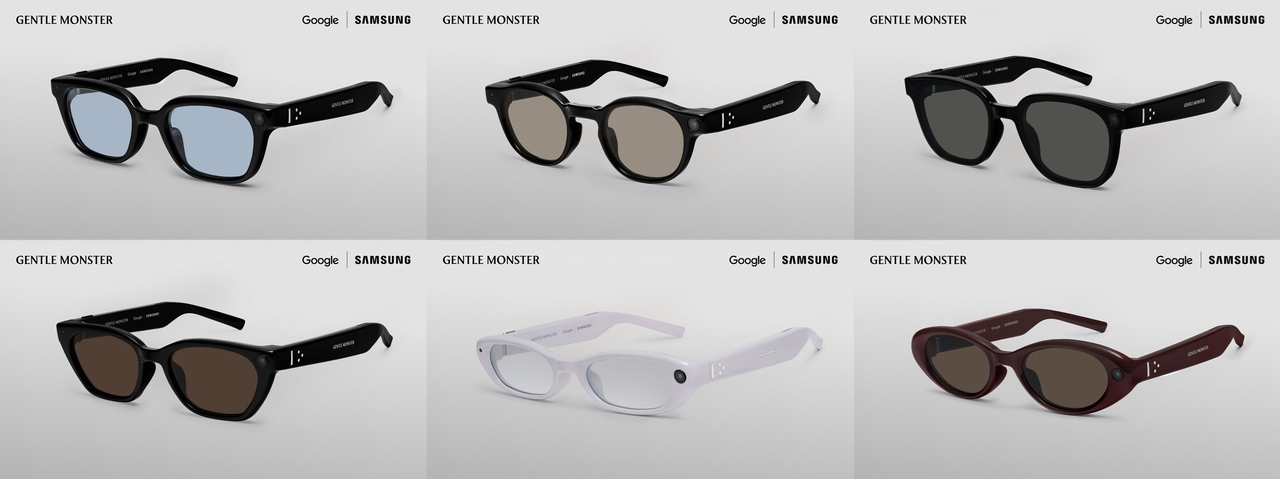
Samsung Electronics and Google's first AI-powered glasses have sold out of their initial preorder allocations despite a starting price of 650,000 won ($490), giving the companies an encouraging early response as they prepare to take on Meta's dominance in smart eyewear.
All 16 models of Intelligent Eyewear, developed with South Korean fashion eyewear brand Gentle Monster, were listed as sold out on its Korean online store as of Monday, four days after preorders opened in South Korea and the US.
Several models sold out within hours Thursday, according to Gentle Monster. Reservations for a public preview in New York have also filled up.
The sellout comes with a caveat. Neither Samsung nor Gentle Monster has disclosed how many pairs were available or ordered, making it impossible to tell whether the glasses are a breakout hit or simply in short supply.
Scheduled for release on Dec. 10, the glasses cost between 650,000 won and 700,000 won in Korea. They pack Google's Gemini AI assistant into Gentle Monster's distinctive frames, backed by Samsung's hardware engineering.
Samsung has made comfort a selling point since unveiling the glasses in July, claiming they would be lighter than most competing AI eyewear. The finished models weigh between 39.6 and 43.9 grams, roughly 7 to 10 grams lighter than the second-generation Ray-Ban Meta glasses, which weigh around 48 to 51 grams
Wearers can ask Gemini about what they see, translate conversations, take photos or get directions without pulling out a phone. There is no display in the lenses, so Gemini responds through speakers. Samsung claims up to nine hours of battery life.
Meta already has a dominant lead. Its Ray-Ban smart glasses helped it capture 94 percent of global shipments of displayless AI glasses in the first half of 2026, according to Counterpoint Research.
With comparable camera resolution and battery life, Samsung and Google will have to make their case through Gemini's capabilities and comfort.
Google is also emphasizing privacy, saying bystanders' faces are obscured before images reach Gemini. Recording is disabled if the external camera indicator is covered.
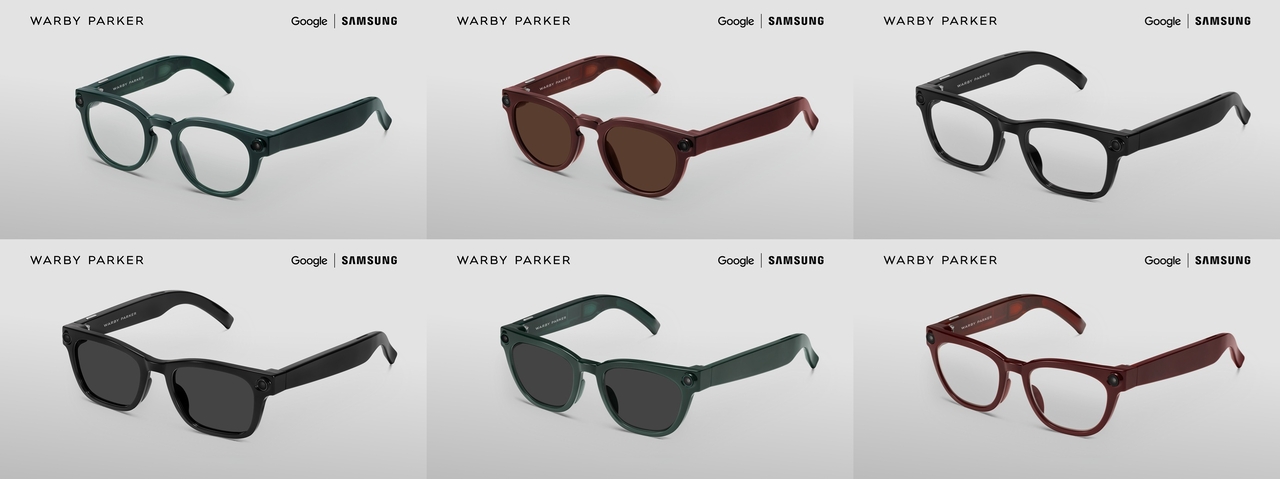
Samsung and Google have separately partnered with US eyewear retailer Warby Parker, whose models start at $395.
By Moon Joon-hyun (mjh@heraldcorp.com)

