




Global brokerages seek clarity on possible trading curbs as Kospi volatility revives regulatory uncertainty
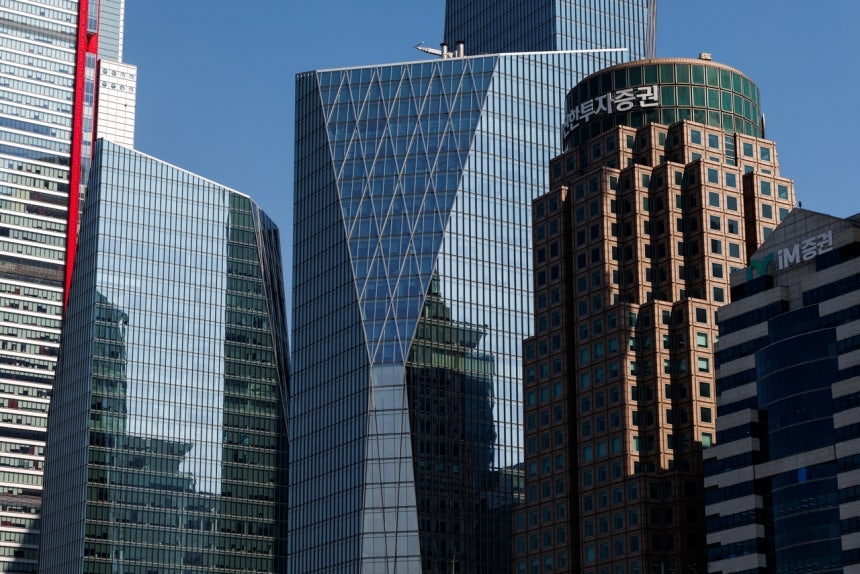
Foreign investors are growing wary of another surprise short selling ban in South Korea, as the Kospi retreats from recent highs with global brokerages seeking clarity on whether regulators could impose sweeping restrictions without warning.
The anxiety reflects lingering distrust following Korea's abrupt blanket ban in November 2023, raising concerns that unpredictable regulatory intervention could add to market volatility.
According to financial industry sources Wednesday, foreign brokerages have been contacting local securities firms to assess the possibility of another ban, despite authorities' recent efforts to stabilize the market.
"Foreign clients and global brokerages keep calling us, worried that regulators might pull the short selling ban card overnight," said an official at a local securities firm. "They seem far more nervous about unannounced regulatory interventions than market volatility itself."
The concerns come amid heavy foreign selling of Korean equities, particularly semiconductor stocks that have driven the market's artificial intelligence-fueled rally.
Foreign investors sold a combined 7.6 trillion won ($5.7 billion) of Samsung Electronics and SK hynix shares from Nov. 2-6, amid uncertainty over AI infrastructure investment and potential US regulatory changes.
The selling pushed foreign ownership in Samsung down to 45.95 percent, its lowest level in about 17 years, and SK hynix to 48.27 percent, a five-year low. The Kospi briefly fell below 5,000 points on Nov. 6, before recovering to close at 5,059.69.
In response, Korean financial authorities held an emergency meeting Friday and introduced a three-month exemption from mandatory collateral maintenance requirements for margin lending, which became effective Monday.
The measure gives securities firms greater flexibility to ease collateral demands and reduce forced selling during market downturns. But some foreign investors remain concerned that more sweeping restrictions could follow.
Memories of 2023 ban linger
In November 2023, Korean authorities announced a blanket short selling ban on a Sunday, just one day before it took effect, catching foreign investment banks and hedge funds off guard.
The sudden decision forced global investors to adjust trading strategies and operational arrangements overnight, leaving lasting concerns about regulatory predictability.
"What frustrates foreign investors most is not market volatility itself, but the unpredictability of regulatory intervention," said a senior official at a foreign equity desk in Seoul.
"In Korea, major decisions can be announced on a Sunday without prior notice, leaving global investors concerned that another abrupt policy shift could come at any time."
The concerns do not indicate that regulators are preparing another ban. Rather, industry officials say the 2023 experience has made foreign institutions particularly sensitive to sudden policy changes during market downturns.
Some also question the effectiveness of the government's stabilization efforts, citing previous announcements about market support funds that did not lead to actual intervention.
"Investors may wonder whether these measures have any real substance, given that similar announcements in the past did not translate into actual action," another securities industry official said.
Taiwan offers contrast
The concerns have also drawn comparisons with Taiwan, another major Asian technology market facing volatility and foreign selling.
Taiwan's Financial Supervisory Commission announced five market-stabilizing measures Friday, effective Monday, including tighter short selling restrictions and higher margin requirements.
The measures reduced the permitted daily volume of intraday borrowed-share selling from 30 percent to 3 percent of average trading volume over the previous 30 sessions and raised the minimum short sale margin requirement from 90 percent to 130 percent, subject to exemptions.
Some market participants view Taiwan's approach as more predictable, citing established regulatory procedures and its history of responding to market disruptions.
"While market participants understand emergency measures during steep downturns, foreign funds still carry deep scars from South Korea's sudden, unannounced Sunday short selling ban," said a senior official at an institutional equity team in Seoul.
"Taiwan operates under a relatively structured set of thresholds, while Korea's ad hoc interventions leave global investors anxious about another unannounced policy shift."
Taiwan is also attracting investor interest through its broad exposure to the AI infrastructure boom, with its semiconductor ecosystem spanning chip manufacturing, advanced packaging and AI servers.
By Choi Yeon-jae (ch0221@heraldcorp.com)

