




As chipmakers race to expand capacity, Korean expert challenges oversupply fears and points to China's gains in cheaper memory
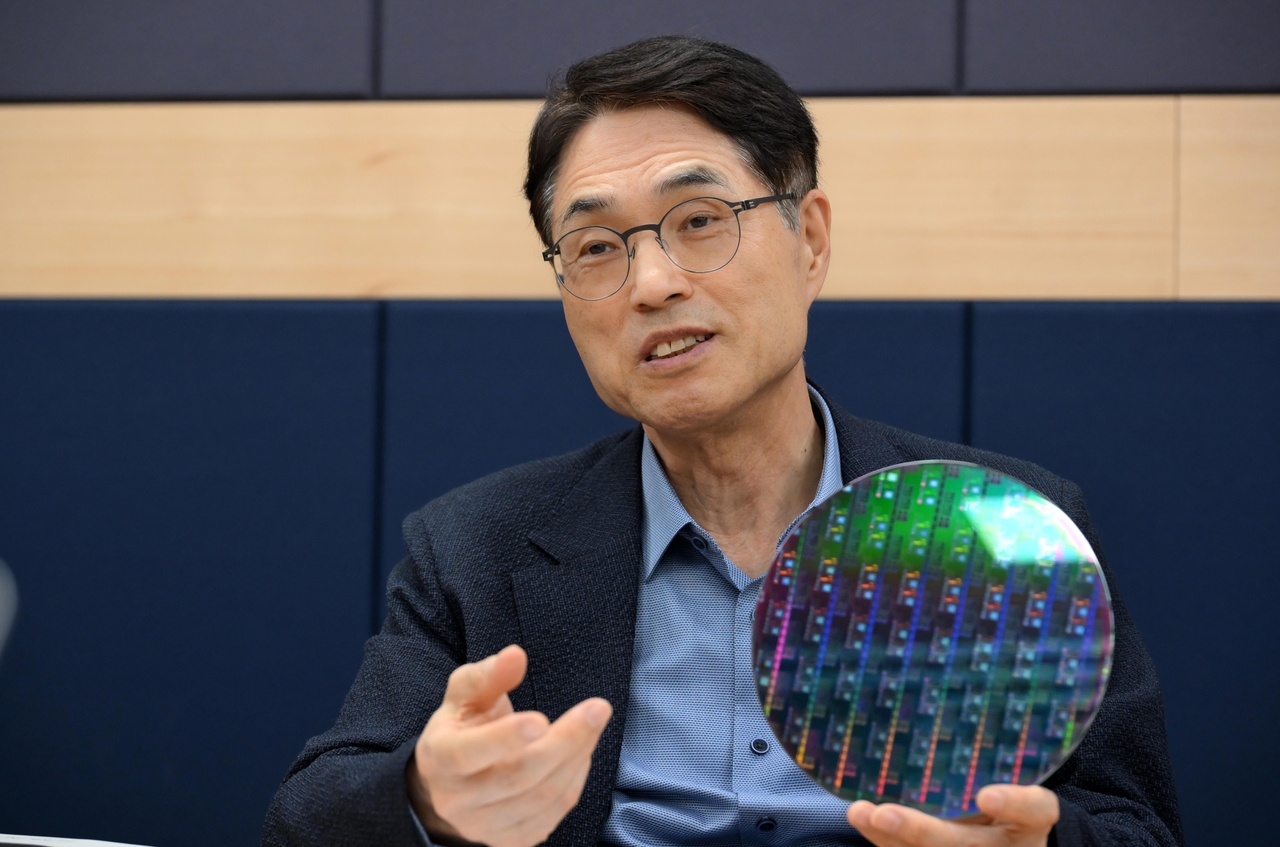
As Samsung Electronics, SK hynix and Micron Technology race to build new chip factories, concerns are growing that expansion to meet today's AI-driven memory shortage could eventually result in another damaging supply glut.
But a leading Korean semiconductor expert argues that expanding capacity could give the industry's dominant players greater flexibility to respond to shifting demand — and potentially help Korean chipmakers regain market share lost to Chinese rivals.
Kim Hyung-joon, head of the Next Generation Intelligence Semiconductor Foundation, said China's growing presence in conventional DRAM partly reflected a shortage of lower-priced memory chips, as Korean manufacturers increasingly prioritize high-margin products for artificial intelligence.
With sufficient production capacity, Samsung and SK hynix could serve both the booming AI market and more price-sensitive segments, challenging Chinese suppliers that have gained ground during the shortage.
"The conventional memory cycle has fundamentally changed," Kim told The Korea Herald in an interview at the Korea Semiconductor Industry Association's office in Seongnam, Gyeonggi Province, on Oct. 6.
Kim estimates the current memory shortage at 30-40 percent, far beyond the 2 percent supply imbalances that historically triggered sharp price swings.
While massive factory expansions could eventually create excess supply, he said chipmakers have greater flexibility than in previous cycles to adjust construction schedules and production ramp-ups according to market conditions.
That flexibility could prove strategically important as China's ChangXin Memory Technologies expands its presence in conventional DRAM, a segment that Korean manufacturers could target more aggressively once supply constraints ease.
Today's shortage, tomorrow's glut?
The scale of the planned expansion is staggering.
Kim estimated Samsung's monthly DRAM wafer capacity at about 720,000, compared with 550,000 for SK hynix and 300,000 to 400,000 for Micron. Together, the three companies process an estimated 1.57 million to 1.67 million wafers a month.
SK hynix plans to build four fabs at its Yongin semiconductor cluster south of Seoul. Kim estimated that the first could eventually process about 350,000 wafers a month — more than 60 percent of the company's current capacity.
Samsung is planning six fabs at a separate Yongin complex, bringing the area's planned total to 10. Their capacities and product mixes have not been disclosed, and Samsung's facilities will also include logic chip production.
If all 10 fabs matched Kim's estimate for SK hynix's first plant, their combined capacity would reach 3.5 million wafers a month — more than twice the three leading memory makers' current combined DRAM capacity. The comparison is hypothetical, given the differing production plans.
Samsung is also expanding its Pyeongtaek campus, while additional semiconductor capacity is planned elsewhere in Korea. Micron is investing in new facilities in Idaho and New York.
"The planned fabs could lift output severalfold," Kim said. "If AI demand fails to keep pace, the market will face oversupply and falling prices."
Oversupply as a weapon
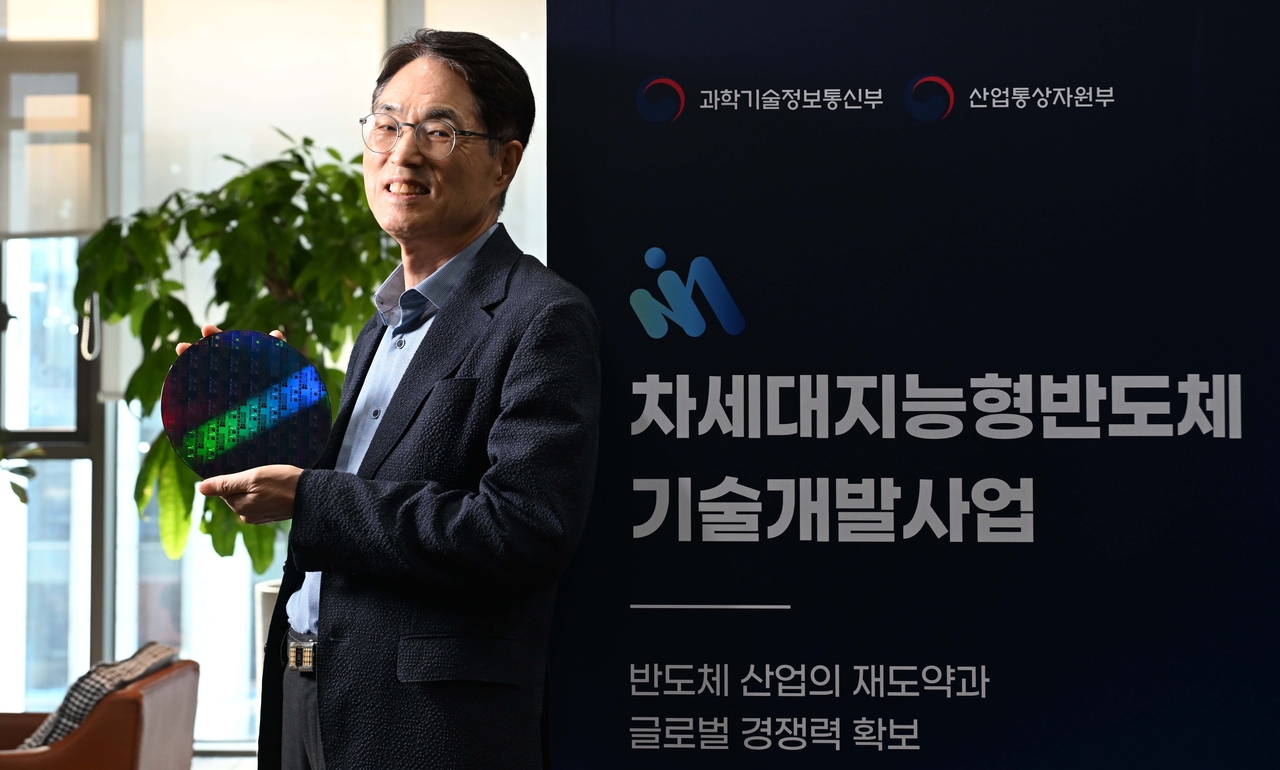
Despite the enormous expansion plans, Kim believes chipmakers have the flexibility to avoid a sudden supply shock.
New fabs take years to construct, equip and qualify for mass production. Even after completion, production ramps up gradually as manufacturers improve yields. Cleanrooms and production lines can also be brought online in phases.
"The companies have announced their plans, but they will watch the market as construction proceeds," Kim said. "They can adjust when to complete each phase."
Demand remains another uncertainty. AI developers are working to make models more memory-efficient, but Kim expects the rapid expansion of data centers to outweigh potential reductions in memory consumption.
He also sees little prospect of leading AI companies voluntarily slowing their investment race, despite growing concerns about excessive spending.
"This is a winner-takes-all race," Kim said. "No company can afford to step back and become No. 2."
Instead, he sees electricity supply as a potentially greater constraint on AI expansion than semiconductor availability, given the enormous power requirements of data centers.
A future increase in memory supply could also reshape competition with China.
ChangXin Memory Technologies has captured an estimated 10 percent of the global DRAM market, according to Kim, as established manufacturers increasingly prioritize higher-margin AI memory. The Chinese company says roughly 60 percent of its output is exported.
"PC and smartphone makers are actually using CXMT memory because the shortage is so severe," Kim said. "That makes it a real threat."
As Samsung, SK hynix and Micron expand production, they could redirect capacity toward conventional DRAM, regain customers and constrain CXMT's growth.
In that scenario, additional supply would not simply threaten profitability. It could become a competitive weapon.
The AI boom's geopolitical risks
The AI boom has created enormous opportunities for Samsung and SK hynix, but it is also intensifying competition over technology, investment and manufacturing locations.
Kim pointed to advances in DRAM manufacturing processes — particularly the 1b, 1c and upcoming 1d generations — as critical indicators of competitiveness, alongside yields for individual memory dies and completed HBM stacks.
Samsung's difficulties with its 1b process helped SK hynix establish an early lead in HBM. But Samsung's recent shipments of 1c-based HBM4 suggest the company is recovering ground and achieving commercially viable yields, Kim said.
SK hynix, meanwhile, uses 1b technology for HBM4 and plans to adopt 1c for its next-generation HBM4E.
Beyond technology, both Korean chipmakers face growing geopolitical pressure over where to invest.
Samsung and SK hynix have major fabrication projects planned in Korea, but Washington's push to expand domestic semiconductor manufacturing could increase pressure on them to build memory capacity in the US.
"The issue is the order in which the fabs are built," Kim said.
Long construction timelines give companies room to delay or reprioritize investments depending on demand, costs, government incentives and geopolitical developments.
Their existing production bases in China face a different challenge: US export restrictions.
Samsung manufactures NAND flash memory in Xian, while SK hynix operates NAND facilities in Dalian and DRAM production lines in Wuxi.
Kim warned that continued restrictions on extreme ultraviolet lithography equipment, combined with possible additional controls, could eventually force Korean chipmakers to scale back or close some Chinese operations.
NAND production is relatively less exposed because it does not depend on EUV technology. Advanced DRAM manufacturing, however, requires increasingly complex EUV processing, leaving SK hynix's Wuxi plant particularly vulnerable.
Kim estimated that SK hynix processes about 300,000 DRAM wafers a month in Icheon, Korea, and another 250,000 in Wuxi.
Transporting wafers from China to Korea for a single EUV exposure might be feasible, he said, but repeated transfers would become increasingly costly and impractical as manufacturing processes advance.
"It is not practical to move wafers between China and Korea five times," Kim said. "If the restrictions continue, Wuxi will ultimately have to scale down."
Beyond the memory crown
For Korea, the longer-term challenge extends beyond defending its leadership in memory chips.
Kim warned that China would eventually narrow the technological gap in advanced DRAM, making it increasingly important for Korean chipmakers to strengthen their presence in foundry services, logic semiconductors and advanced packaging.
Foundry manufacturing is a natural extension of Korea's semiconductor expertise, he said, but packaging remains a critical weakness.
Taiwan's TSMC, the world's largest contract chipmaker, offers customers integrated manufacturing and advanced packaging solutions, including its chip-on-wafer-on-substrate technology.
Samsung, by contrast, still faces challenges in providing comparable end-to-end solutions, potentially requiring customers to rely on separate packaging providers.
Surging AI demand has stretched TSMC's capacity, creating an opening for Samsung to win more foundry orders. But Kim stressed that attracting customers would not be enough without sustained improvements in manufacturing yields and packaging capabilities.
"Korea's long-term test is whether it can turn its memory dominance into broader semiconductor strength before its competitors close the gap," Kim said.
By Jo He-rim (herim@heraldcorp.com)

