




One-finger difference reveals contrasting approaches to dexterity, cost, mass production
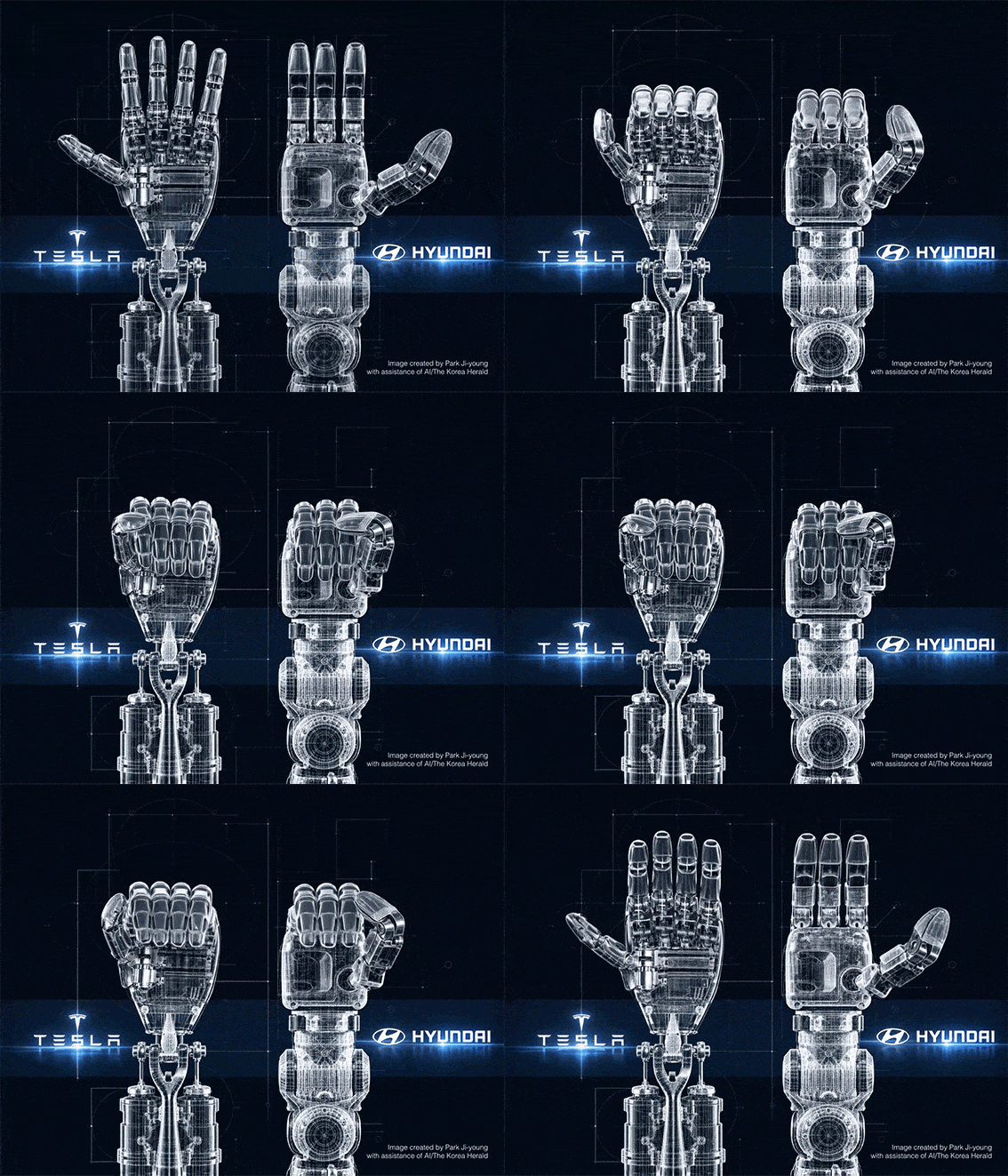
Four fingers or five? The answer could help determine which humanoid robots make it out of the lab and onto factory floors first.
Hyundai Motor Group’s Boston Dynamics has settled on four fingers for its electric Atlas humanoid, concluding that a fifth adds cost and complexity without due benefit for industrial work. Tesla has taken the opposite approach with Optimus, giving it five fingers in pursuit of humanlike dexterity.
The contrasting designs reveal two different bets on the humanoid market. Atlas prioritizes simpler, more durable hardware that can be manufactured and deployed in factories at scale. Optimus accepts greater engineering complexity in pursuit of a general-purpose robot that could eventually work not only in factories, but also in homes.
At stake is one of humanoid robotics’ toughest engineering problems. Hands must be dexterous enough to manipulate tools and components designed for humans, yet cheap, durable and simple enough to manufacture by the thousands.
Atlas' ‘missing pinky’
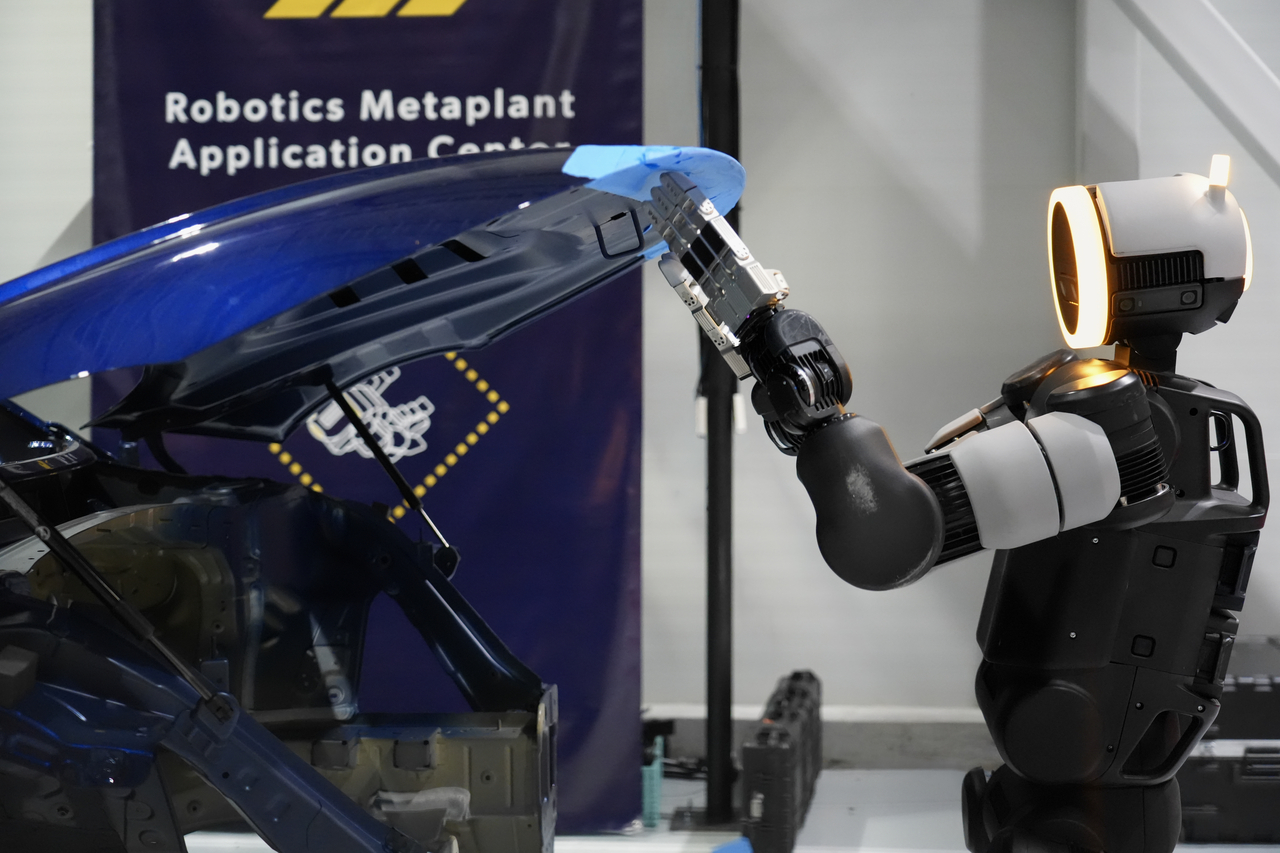
Boston Dynamics recently revealed the finalized hand architecture for Atlas, adding a fourth finger to its earlier three-digit design and giving the hand 13 degrees of freedom.
The decision was strikingly practical. Alberto Rodriguez, head of manipulation at Boston Dynamics, said engineers taped down their own pinkies while performing tasks and found that the fifth finger contributed little to fine manipulation and tool use in manufacturing environments.
After studying industrial robot applications, the team concluded that four fingers offered the best balance of dexterity and economics, reducing design complexity, power consumption and costs, while improving durability and repairability.
Atlas’ four-finger hand is equipped with pressure-sensitive tactile sensors in its fingertips and palm. In demonstrations, the robot picked up a drill bit, inserted it into a chuck, grasped the drill and bored a hole into wood.
More tellingly, it demonstrated “in-hand manipulation” — repositioning objects using only finger movements — by twirling a drumstick and rolling two golf balls inside its palm. It also performed precision assembly by tightening nuts onto bolts.
“The real test for a robotic hand is in-hand manipulation,” said Yun Dong-won, a professor of robotics and mechatronics engineering at Daegu Gyeongbuk Institute of Science and Technology. “Adding a fourth digit directly boosts hand dexterity, increasing contact area and enabling the robot to securely rotate and adjust parts without dropping them.”
Optimus' 5 fingers, bigger ambition
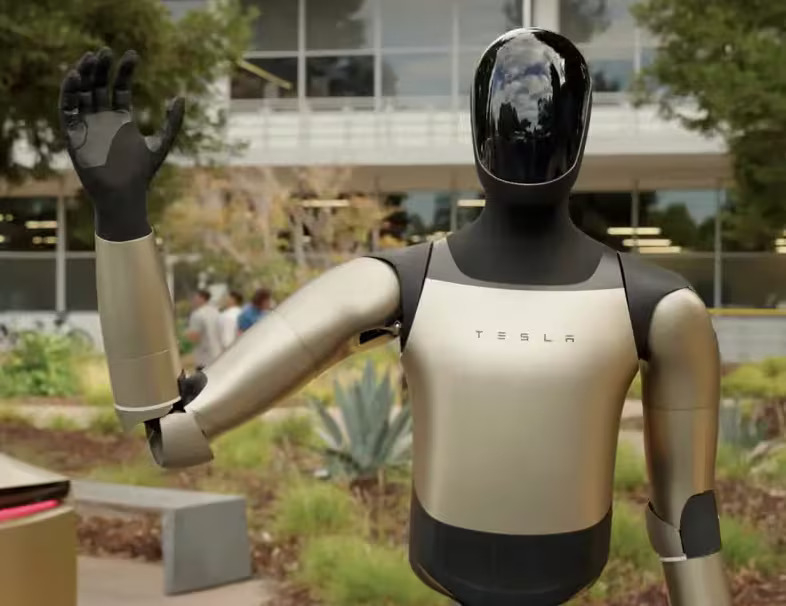
Tesla is making a different trade-off.
Optimus retains five humanlike fingers and 22 degrees of freedom, giving it greater potential dexterity for delicate and varied tasks. But that capability comes at a cost.
“Motors are typically the single most expensive component in a robotic hand,” Yun said. More degrees of freedom means more actuators to control, increasing both hardware costs and software complexity.
That complexity is already emerging as a manufacturing challenge for Tesla.
According to Samsung Securities analyst Im Eun-young, hand assembly remains a key bottleneck for Optimus. More than 100 miniature components must be packed into each hand and forearm, with tight tolerances and sensitive tactile sensors contributing to rework during early-stage production.
The two robots also differ fundamentally in how their fingers move.
Atlas uses modular actuators positioned around its joints. Optimus relies on a tendonlike cable system, with motors housed in the forearm pulling cables to move the fingers.
Yun said Tesla's approach helps keep the hand lighter and less bulky while containing actuator costs. But assembling the intricate cable system is labor-intensive, potentially constraining production yields.
Tesla is accepting that complexity because its ambitions extend far beyond manufacturing.
At Tesla's 2024 annual shareholders meeting, CEO Elon Musk described Optimus as a robot that could eventually perform every sort of task, from factory work to walking dogs, buying groceries and mowing lawns.
That broader vision makes five fingers more important. A robot operating in a home must handle an enormous variety of objects and tasks in an environment far less predictable than a factory.
4 vs. 5: Which scales first?
It is too early to declare a winner.
Hyundai is targeting factory deployment and volume production of Atlas by 2028, while Tesla is also working toward broader commercialization of Optimus.
But their hands illustrate fundamentally different routes to that goal.
“Tesla has a much broader vision,” Yun said. “But from a manufacturing and yield perspective, Atlas’ modular approach may offer a smoother path to volume commercialization than cable-driven mechanics.”
Tesla could narrow that manufacturing disadvantage if it automates the difficult cable-assembly process, he added. In that case, Optimus could retain the benefits of five-finger dexterity while becoming easier to mass-produce.
The larger prize lies outside the predictable environment of a factory.
“The real holy grail for humanoids isn’t the structured plant floor — it’s the home, where tasks are chaotic and unstructured,” a researcher at a state-run robotics institute said. “Tesla may be reaching for the stars right now, but surviving these early growing pains could make it one of the front-runners in the most lucrative robotics sectors.”
For now, the difference between two of the world's most closely watched humanoids can be counted on one hand: Atlas is betting that four fingers are enough. Tesla is betting the fifth will eventually be worth the trouble.
By Byun Hye-jin (hyejin2@heraldcorp.com)

