




Hybrid sales put Korean group ahead for two straight months, but looser fuel rules give Detroit rivals room to fight back
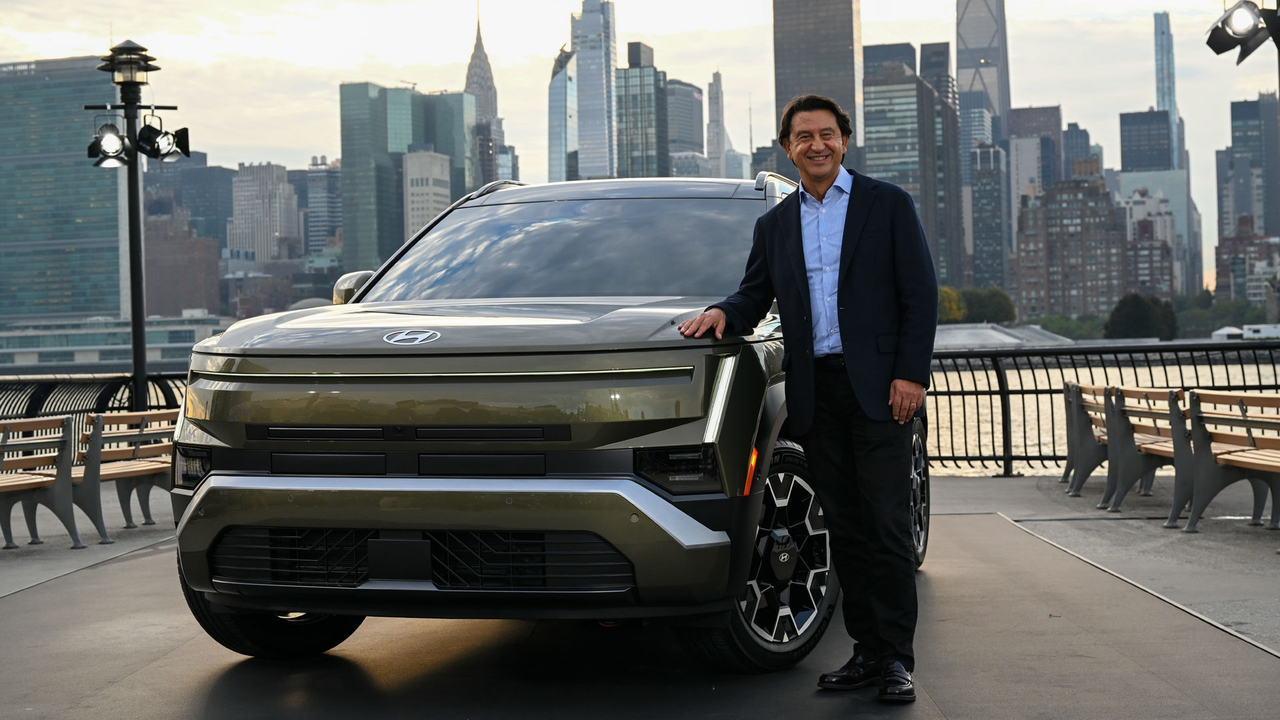
Hyundai Motor Group is closing in on Ford’s position as the third-largest automaker in the US, with strong hybrid sales putting a potential third-place finish on an annual basis within reach.
Hyundai Motor and Kia outsold Ford in July and August, building a lead of more than 15,000 vehicles over the two months. But sustaining that momentum could become harder as Washington relaxes fuel economy rules, giving US rivals more room to focus on their profitable gasoline-powered SUVs and pickups.
The contest will test whether Hyundai’s expanding hybrid lineup and broader choice of powertrains can translate recent monthly gains into a lasting shift in the US market.
Closing the gap
Combined US sales of Hyundai and Kia reached 178,405 vehicles in August, giving the group a record monthly market share of 12.9 percent, according to market research firm Omdia.
The result kept Hyundai Motor Group ahead of Ford for a second consecutive month, after taking third place in July.
Across July and August, Hyundai and Kia sold 343,689 vehicles, compared to Ford’s 327,896. However, for the third quarter, the Korean automakers totaled 506,200 units, trailing Ford’s 507,395 by a narrow margin of 1,195 vehicles.
According to Cox Automotive, the annual race remains tighter. Hyundai and Kia held a combined 11.8 percent share from January through August, trailing Ford’s 12.2 percent. A quarterly victory would have marked a milestone, but overtaking Ford for the full year will require Hyundai to sustain its gains through the remaining months.
Hybrids have been central to that push, allowing Hyundai and Kia to appeal to buyers seeking better fuel economy without relying on charging infrastructure.
Detroit gets breathing room
A change in US regulation could complicate Hyundai’s advance.
The Trump administration has rolled back Corporate Average Fuel Economy standards, lowering the industrywide target for 2031 from 50.4 miles per gallon to 34.9 mpg, or from 21.4 to 14.8 kilometers per liter. The revised rules cover model years 2027 through 2031 and are set to take effect in late November.
Because compliance is measured across an automaker’s fleet, weaker targets reduce the pressure to sell more electric vehicles to offset less efficient gasoline models.
“High battery costs and heavy R&D expenses often squeeze profitability on EVs,” said Lee Ho-geun, an automotive engineering professor at Daeduk University. “With lower fuel economy thresholds, legacy US automakers can redirect focus toward their higher-margin products, such as large SUVs and pickup trucks, expanding market share in their most profitable segments.”
That gives Ford, General Motors and Stellantis greater flexibility to defend their domestic positions.
Kim Pil-su, an automotive engineering professor at Daelim University, said the changes particularly benefit manufacturers with limited hybrid offerings and a heavy reliance on gasoline vehicles.
Regulatory relief, however, does not necessarily mean buyers will abandon more fuel-efficient alternatives.
Hybrids still matter
According to Deloitte’s 2026 Global Automotive Consumer Study, US consumer preference for conventional combustion vehicles fell from 68 percent in late 2021 to 61 percent in late 2025. Interest in hybrids rose from 21 percent to 26 percent, while preference for battery EVs increased from 5 percent to 7 percent.
Those findings suggest Hyundai’s hybrid investment could remain an advantage even as regulatory pressure eases.
Lee said the rule changes may require adjustments to Hyundai’s product strategy, but were unlikely to trigger a broader crisis. Demand for a range of powertrains could support its expansion into plug-in hybrids and extended-range electric vehicles, particularly in larger vehicle segments.
“Hyundai already boasts a complete powertrain portfolio. They just need to adjust the production ratios,” Kim said, adding that hybrids’ fuel economy would remain attractive to cost-conscious US drivers.
The next test
Hyundai plans to build on its hybrid gains with extended-range electric vehicles, which use an electric motor to drive the wheels and a gasoline engine to generate electricity.
The Santa Fe EREV is scheduled to debut in the US in early 2027, with production at Hyundai’s Alabama plant. A Genesis GV70 EREV is set to follow, either imported from Korea or manufactured locally.
Hyundai is targeting a combined battery-and-fuel range of about 965 kilometers for the Santa Fe EREV and more than 1,030 km for the Genesis model.
The vehicles could broaden Hyundai’s appeal among buyers interested in electric driving but concerned about charging access. Their contribution to sales, however, will depend on pricing and consumer acceptance.
For now, Hyundai’s immediate opportunity rests on the lineup already gaining ground. Two months ahead of Ford have put a historic third-place finish within reach. Turning that lead into an annual result — and holding it — will require continued sales gains as US rivals gain more freedom to compete on their strongest products.
By Byun Hye-jin (hyejin2@heraldcorp.com)

