




Awaiting regulatory approval, obesity drug could launch before year-end at estimated W150,000 for four weeks, putting pressure on rivals’ pricing
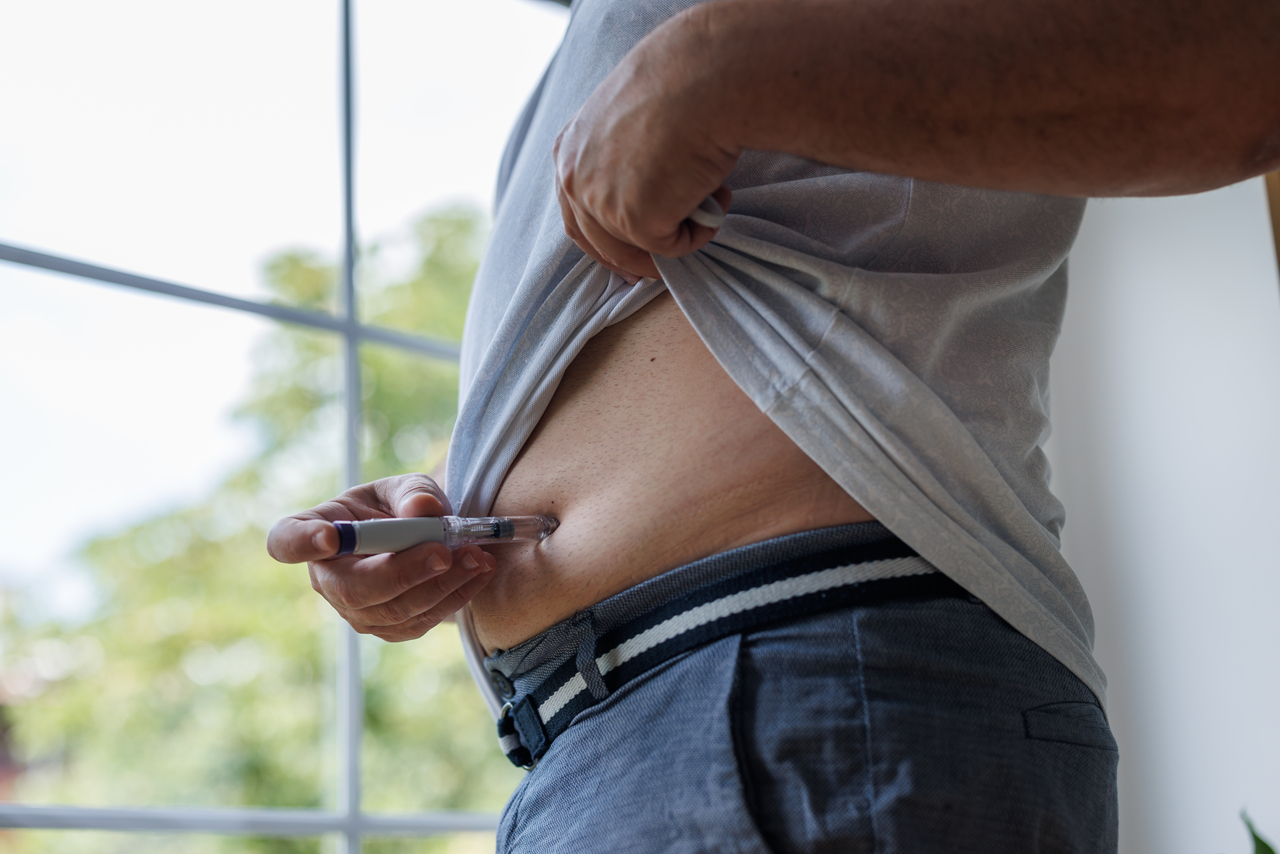
Hanmi Pharmaceutical’s Eppe is poised to challenge Wegovy and Mounjaro in Korea’s fast-growing obesity drug market, with price emerging as a potentially decisive advantage.
The homegrown glucagon-like peptide-1, or GLP-1, drug is expected to launch before year-end, pending approval from the Ministry of Food and Drug Safety. Hanmi has yet to announce a final price, but industry estimates suggest a four-week supply could cost around 150,000 won ($111).
That would undercut the lowest prices listed Friday on Korean drug-price comparison platform My Doctor: 272,000 won for a four-week supply of Eli Lilly’s Mounjaro at 2.5 milligrams and 210,000 won for Novo Nordisk’s Wegovy at 0.25 mg. Eppe’s final pricing and dosage structure remain undisclosed.
The potential discount gives Eppe, whose active ingredient is efpeglenatide, an opening in a market dominated by its global rivals. Mounjaro held about 85 percent of Korea’s obesity drug market in August, while Wegovy accounted for roughly 8 percent, according to BRP Insight.
Room for a price fight
Wegovy’s response to Mounjaro shows how a new entrant can shake up pricing.
Before Mounjaro’s Korean launch in August last year, Novo Nordisk cut Wegovy’s wholesale prices by roughly 10 to 44 percent, depending on dosage.
Previously, Wegovy had a uniform wholesale price of 372,000 won for a four-week supply. Novo Nordisk introduced dosage-based prices of 210,000 won for 0.25 mg, 220,000 won for 0.5 mg, 240,000 won for 1 mg and 320,000 won for 1.7 mg. These wholesale figures are distinct from the consumer prices listed on comparison platforms.
Whether Eppe prompts another round of cuts will depend on how aggressively Hanmi prices it — and how much demand it attracts.
“Obesity drugs are often used for extended periods rather than as short-term treatments, meaning that even a relatively small monthly price difference can become significant over the course of treatment,” said a drug industry official.
“If Eppe is launched at a substantially lower price than Wegovy and Mounjaro, the established products could face pressure to respond. Whether they actually cut prices, however, will depend on various factors including demand, prescribing patterns and the extent of Eppe’s market penetration.”
Beyond the price tag
Price alone will not determine Eppe’s prospects.
According to Hanmi, the drug produced an average weight reduction of 9.75 percent after 40 weeks in a Phase 3 trial involving 448 Korean adults with obesity.
That is below the headline weight-loss figures reported in pivotal trials for Wegovy and Mounjaro. The results cannot be directly compared, however, because the studies differed in patient populations, treatment periods and dosing regimens.
The trial provides Korean clinical data that physicians can weigh alongside the global evidence for the established drugs.
Hanmi also plans to manufacture Eppe domestically, potentially giving it greater flexibility in managing supply as it builds a foothold.
The market’s rapid expansion could help. According to market intelligence firm IQVIA, Korea’s obesity drug market more than tripled to 819.5 billion won last year from 242.6 billion won in 2024.
A cheaper option could draw new patients into treatment, giving Eppe room to grow without relying entirely on people switching from rival drugs.
“A lower-priced domestic option could bring in patients who have held back because of the cost of treatment,” another drug industry official said.
“But whether Eppe can turn that potential into meaningful market share will ultimately depend on where Hanmi sets the price and whether doctors and patients see enough value to switch from the two drugs that already dominate the market.”
By Kan Hyeong-woo (hwkan@heraldcorp.com)

