




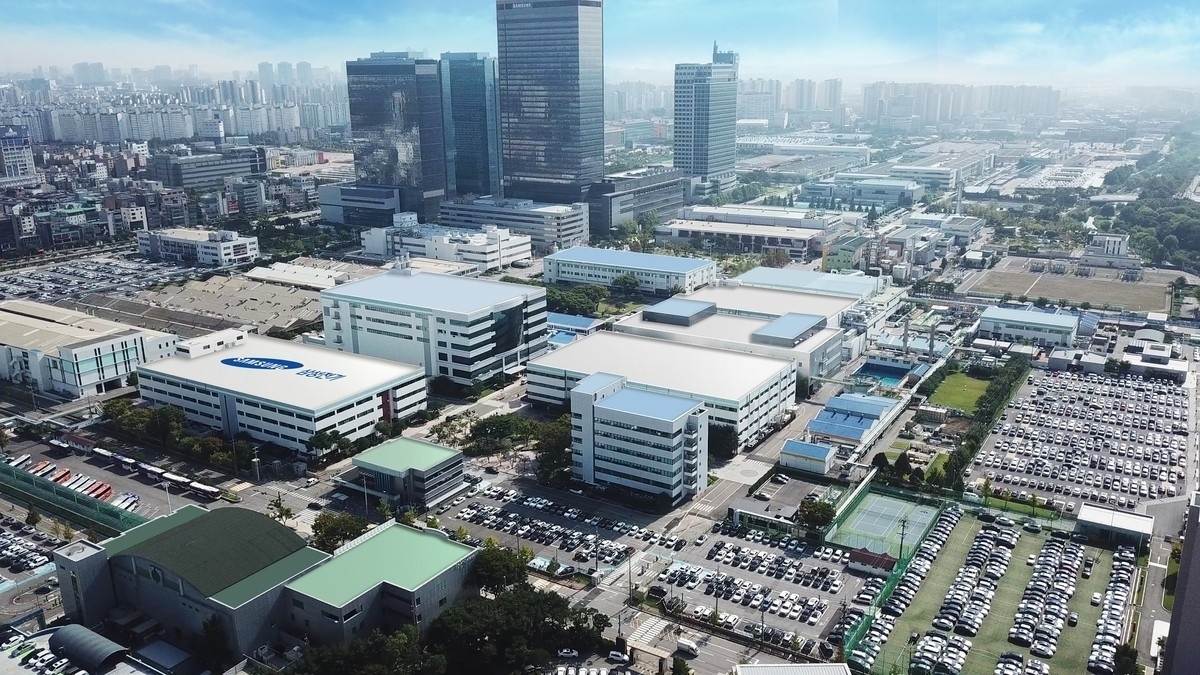
Samsung Electro-Mechanics will spend $5 billion expanding chip package substrate capacity in South Korea and Vietnam, with global customers helping fund part of its new AI-server substrate capacity in Sejong and committing to future volumes.
The Samsung Electronics affiliate said Monday it would invest 4.27 trillion won ($3,2 billion) in its Sejong plant through May 2028 to expand production of flip chip-ball grid array substrates, or FC-BGAs, which are used in AI accelerators and other high-performance chips. Mass production is scheduled to begin in September 2028.
The investment is the company’s largest for a single product and equals 43.6 percent of its consolidated equity at the end of 2025.
Samsung Electro-Mechanics said global big-tech customers are providing part of the capital expenditure and guaranteeing medium- to long-term purchase volumes. It did not identify the customers or disclose how much they are contributing.
Local media reports citing multiple industry officials said Nvidia and other big-tech customers had provided advance payments totaling trillions of won, with Nvidia accounting for the largest share. Samsung Electro-Mechanics has not confirmed those details.
FC-BGAs have become increasingly important as AI chips grow larger and more complex, requiring denser wiring, more substrate layers and greater power-handling capacity. In March, CEO Chang Duck-hyun said customer demand for server and data center FC-BGAs was running more than 50 percent above the company’s production capacity.
Separately, the company said its Vietnamese subsidiary would invest 2.51 trillion won to expand a package substrate plant by April 2028. The filing did not specify the products or customers involved, so it is unclear if it will make AI-server FC-BGAs.
The Sejong spending also puts concrete figures and a near-term timetable behind a broader plan announced in July to invest about 8 trillion won at the site through 2040.
The customer-backed expansion comes as buyers are also securing Samsung Electro-Mechanics’ capacitor supply through longer-term contracts. Since May, the company has disclosed 3.32 trillion won in long-term deals for silicon capacitors and AI-server multilayer ceramic capacitors, including a 1.1 trillion won MLCC contract announced Sept. 1 for delivery in 2027.
By Moon Joon-hyun (mjh@heraldcorp.com)

