




Fashion platform’s potential 10 trillion won valuation hinges on carving out beauty foothold and turning overseas growth into profits
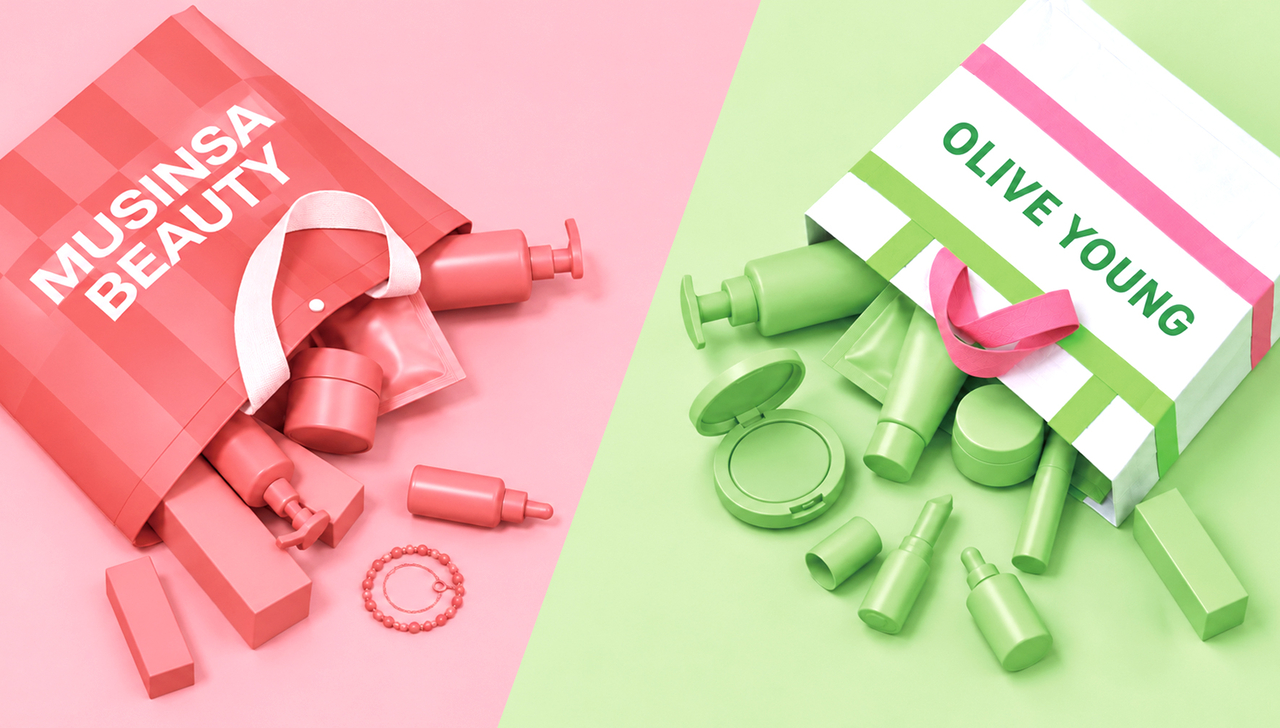
Musinsa is going up against CJ Olive Young in beauty as it makes its case to investors that the company is worth as much as 10 trillion won ($7.2 billion). The harder sell is to prove that its nonfashion ventures can deliver profits to match.
The fashion platform filed its listing application Sept. 7, with market insiders floating a valuation well above the 5.5 trillion won implied by unlisted-market trading that day and the 3.5 trillion won valuation it secured in a 2023 funding round.
Beauty is shaping up as an early test of that pivot. Armed with more than 16 million fashion customers, Musinsa is moving into cosmetics and opening dedicated stores, challenging an incumbent whose extensive retail network makes it a formidable competitor.
Also expanding are Musinsa's private-label business and network of overseas stores, transforming a company with roots in an online sneaker community into a broader retail player.
Even so, there is a catch. After generating nearly 1.5 trillion won in revenue last year, Musinsa posted record first-half revenue of 822 billion won. Operating profit, however, fell 11.2 percent to 52 billion won as material costs, logistics fees and store expansion spending rose.
"To justify a 10 trillion won valuation, Musinsa has to turn Musinsa Standard into a genuine global brand and prove its overseas operations can actually make money," an analyst at LS Securities said.
Taking on Olive Young
Musinsa’s beauty playbook starts with its existing customers.
More than 8 in 10 Musinsa Beauty shoppers previously used the platform for other categories, according to the company. That overlap gives it a base from which to expand cosmetics sales without building an entirely new audience.
The harder task is turning those relationships into a lasting advantage against Olive Young.
“There's room for Musinsa to break in, since it caters to a different crowd, even if Olive Young's grip isn't loosening soon,” one industry official said, adding that Musinsa’s shopper loyalty could enhance its bargaining position with brands.
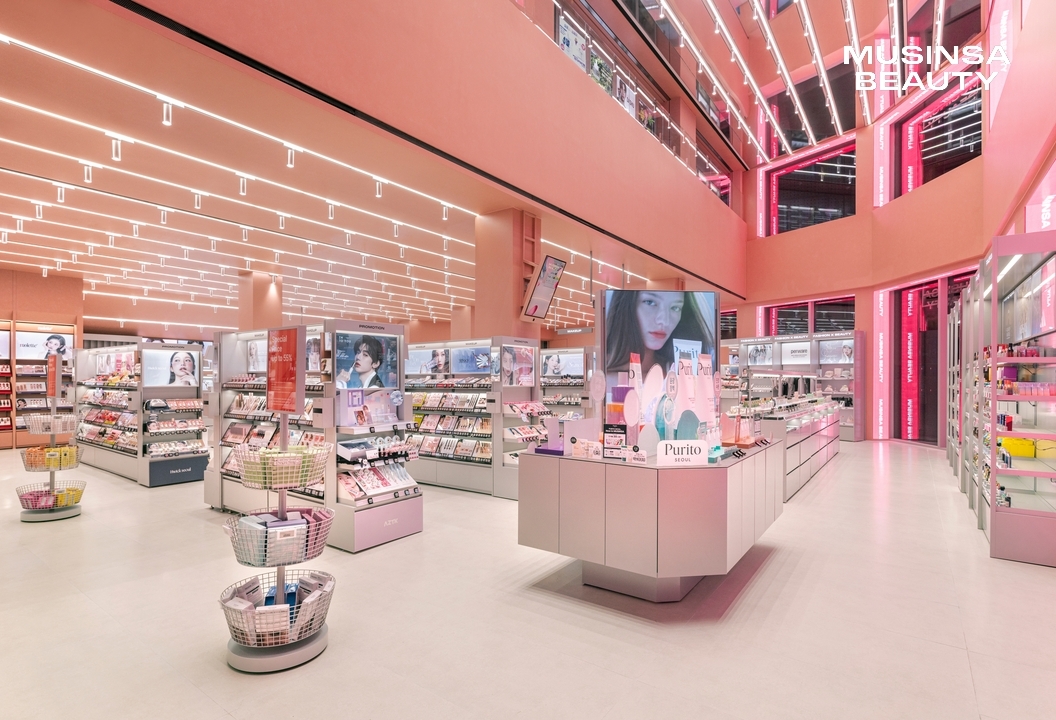
Its first stand-alone beauty store signaled Musinsa's intent to take a different route, with a pharmacy-grade concept to court medical tourists seeking post-procedure care.
It rang up 250 million won in sales within three days of opening, with women making up 76 percent of buyers and foreign customers nearing 60 percent.
"As drugmakers push into cosmetics, Musinsa's pharmacy-channel ties give it an edge in overseas credibility, bolstering the K-beauty export narrative for dermocosmetic brands," a Seoul-based analyst at IBK Securities said.
Musinsa is also building its own corner of beauty retail not only through under-the-radar labels but also global sourcing, including the Chinese labels Into You and AZTK.
The brand roster on Musinsa Beauty climbed from about 800 in 2021 to roughly 2,500 as of August, while last year's beauty transaction value surged 1,340 percent compared to 2021.
Its second beauty store, set to open in Seoul's Seongsu-dong in November, sets up a direct face-off against Olive Young N Seongsu.
Musinsa already tested the waters through Musinsa Megastore Seongsu, the country's largest single fashion-and-beauty store. The beauty zone's transaction value rose about 20 percent in August from April, the company noted.
Taking fashion overseas
While beauty pits Musinsa against Olive Young at home, overseas expansion measures whether its fashion mainstay can extend past its Korean customer base.
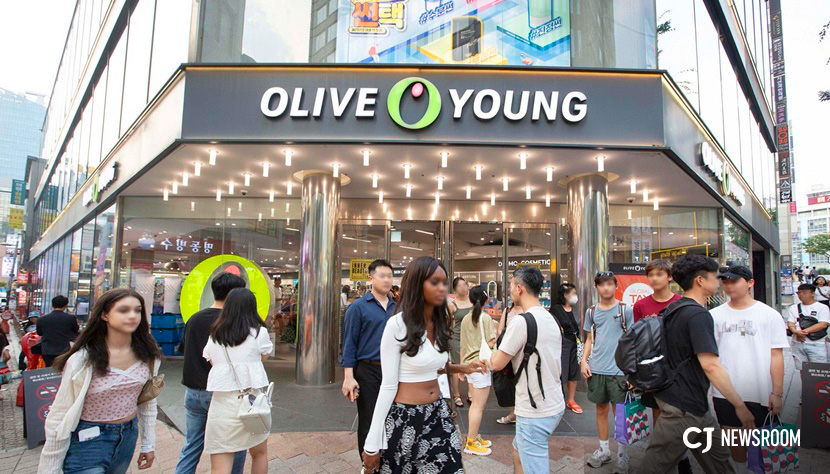
Musinsa's overseas play is most on display in China, where the company set a target of more than 100 stores by 2030.
It currently runs one multibrand Musinsa Store and four Musinsa Standard locations, all but one clustered in Shanghai. Musinsa is breaking into southern China with new stores in Shenzhen on Oct. 31.
The company said young Chinese shoppers account for more than 85 percent of its buyers there.
Further afield, it has formed partnerships for entry across Malaysia, Vietnam, Indonesia and the Philippines. Japan has also become a proving ground, with its first stand-alone pop-up set for Osaka this October. In Taiwan, it is targeting 15 stores within five years, mostly under its private label.
Online sales are growing as well. Musinsa’s Global Store, a cross-border shopping platform operating in 13 markets, recorded a 143 percent increase in second-quarter transaction value. First-half exports rose ninefold to 37.2 billion won.
The growth comes from a relatively small base. Exports still represent a modest portion of total sales, and Musinsa Shanghai has yet to turn a profit.
That leaves investors weighing swift scaling against the expense of establishing stores, logistics and brand recognition in unfamiliar markets.
A listing could provide capital to accelerate the rollout. But a valuation of up to 10 trillion won would require confidence that Musinsa can do more than add stores and lift sales.
By No Kyung-min (minmin@heraldcorp.com)

