




Labor shortages demand humanoid robots, but union hurdles loom
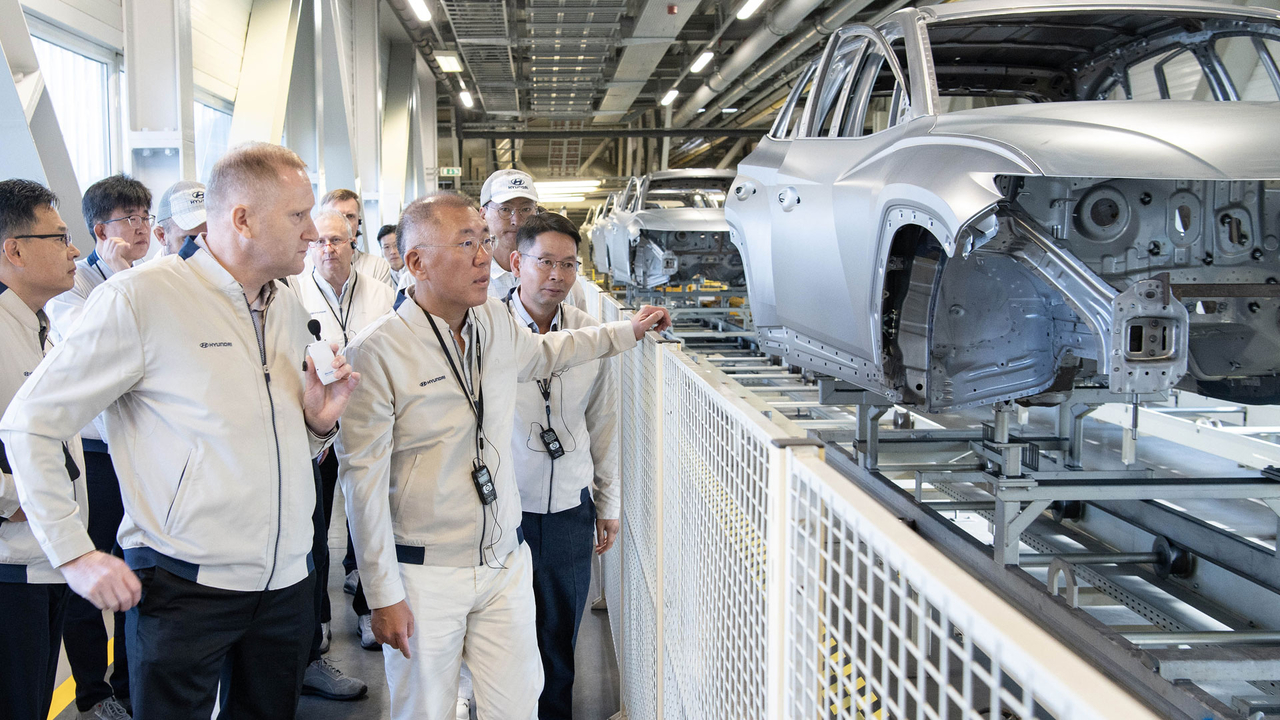
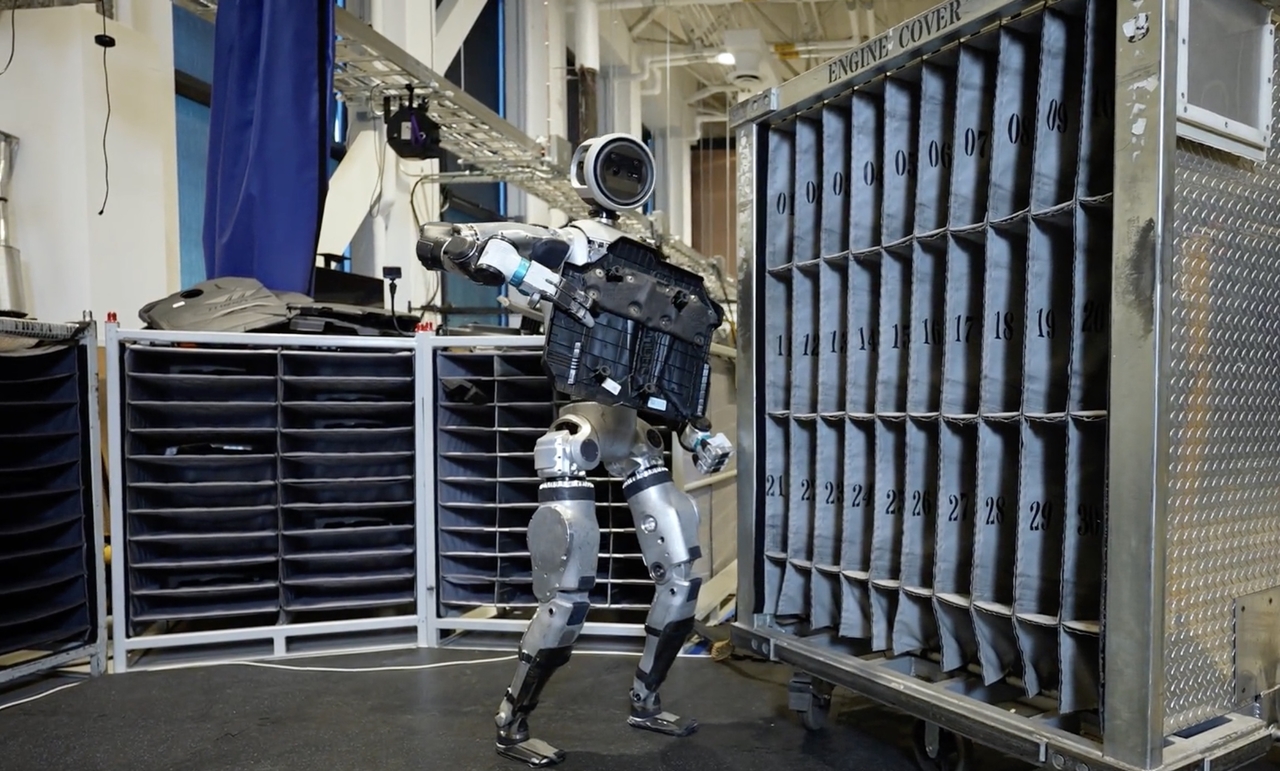
Hyundai Motor Group is exploring plans to deploy Atlas humanoid robots at its Czech manufacturing plant, positioning Europe as the next strategic proving ground after the US for its robotics-powered smart manufacturing vision.
Developed by its US subsidiary Boston Dynamics, the robot’s deployment in Hyundai’s own European lines offers a critical real-world testbed to validate operational reliability, safety and workplace integration. If successful, it could pave the way for broader commercial rollout across a largely untapped European market — a high-potential frontier outside China’s fiercely competitive humanoid robotics market.
Czech plant as European testbed?
According to recent media reports, Petr Michnik, head of the administration division at Hyundai Motor Manufacturing Czech, said the plant is discussing with Boston Dynamics and Hyundai headquarters about deploying the Atlas robot.
While Michnik did not specify a concrete timeline for testing the robots in active production lines at the Czech plant, he was cited in an interview with the Czech-based Automotive Industry Association, saying, “We hope that testing and operating humanoid robots in the Czech Republic can also begin as soon as possible.”
Established in 2009, the Czech plant in Nosovice is Hyundai’s sole auto manufacturing plant within the EU and serves as the carmaker’s key European production base. It produces flagship models, including the Tucson SUV, Kona SUV and i30 SUV.
Given the facility’s symbolic status as a key European production base, deploying Atlas robots there would likely establish it as Hyundai’s second testbed for humanoid-led automation, following its US operations in 2028.
Automation has already advanced significantly at the Czech plant, where 566 robots are now in operation — more than double the number from 20 years ago. According to the company, automation took over the tasks of approximately 200 workers, all of whom were reassigned to other roles.
Describing humanoids as the logical evolution of automation, Michnik projected that they could be adopted on factory floors sooner than autonomous driving cars take to public roads.
Why Europe matters
Experts view Europe as an ideal proving ground for Hyundai to validate Atlas on factory floors and tap into a blue ocean market, where high wages and an aging population are driving demand for advanced automation.
Han Jae-kwon, a robotics engineering professor at Hanyang University and chief technology officer of AeiROBOT, said, “Don’t assume Hyundai is building these robots just for its own car factories in Europe. They will serve as the initial buyer to pump up early demand.”
“Using their own facilities for initial deployment is the safest way to make the robots learn, adapt and evolve. Once they achieve economies of scale, they can drive real growth, ultimately aiming to supply these robots to diverse industrial sites beyond Hyundai.”
Chang Tai-woo, an industrial engineering professor at Kyonggi University, echoed the view and noted, “Europe suffers from a more critical shrink in its labor force than the US due to aging demographics and low fertility rates, with Eastern Europe hit even harder by migration to Western Europe. From this perspective alone, the potential for applying humanoid robotics is exceptionally high.”
Unlike the technology-led US market, European demand for humanoid robotics is largely driven by acute necessity.
According to an EU report cited by AFP on July 14, the population of the 27 EU member states is projected to peak at 453.3 million in 2029 before steadily declining to below 400 million by 2100, representing an overall 11.7 percent decrease from the current 450.6 million.
Such demographic pressures inevitably point to a shrinking labor supply across the continent. Eurostat projected in 2023 that between 2022 and 2060, the EU’s working-age population — aged 15 to 64 — will decline by 13 percent.
Although local startups like the UK’s Humanoid — the region’s first nonlisted robotics unicorn valued at over $1 billion — are emerging, Hyundai holds a distinct advantage in leveraging its decadeslong manufacturing prowess in the automotive sector.
Han noted, “The sheer scale and technological advancements in both hardware and software will likely position Hyundai as a leading player in the industry.”
Calculated approach
Despite its strategic vantage point, Hyundai is taking calculated steps to address potential labor friction following pushback from its South Korean union over Atlas deployment in domestic factories.
Michnik explained that adopting Atlas goes beyond cutting labor costs. The goal is to boost manufacturing quality while creating a safer, less physically demanding environment for workers.
“Hyundai’s approach to the European market contrasts with its US strategy,” Chang noted. “While the company focuses on validating commercial and technical feasibility in the US, it must navigate Europe far more cautiously given the strong social sensitivity around labor rights. Even in Eastern Europe, deploying humanoid robots will prove challenging without first addressing potential social conflicts.”
Pointing to Europe’s stricter regulations around worker protections and human-robot collaboration, Chang noted that Hyundai will initially lead by demonstrating tangible improvements in workplace safety and working conditions before pushing for broader, long-term adoption.
In the US, introducing automation or AI typically moves forward with fewer hurdles unless governed by a specific union collective bargaining agreement, and Hyundai’s US operations currently lack union representation.
In contrast, Europe applies a stringent precautionary principle to technology deployment, mandating comprehensive risk assessments that will likely prompt the union at Hyundai’s Czech plant to negotiate the operational impact of the Atlas robot.
By Byun Hye-jin (hyejin2@heraldcorp.com)

