




China remains largest destination for detected leaks

South Korea’s expanded espionage law took effect Sunday, giving prosecutors a new route to pursue serious foreign-linked theft of state secrets, including potentially sensitive semiconductor and artificial intelligence technologies, as national security crimes.
The revised Criminal Act adds Article 98-2, which applies when a person, under the direction, inducement or other communication of a foreign country or equivalent organization, searches for, collects, discloses, transfers or brokers state secrets. The offense carries a minimum sentence of three years in prison, with a maximum of 30 years.
This is the first major expansion of espionage provisions in the Criminal Act since it became law in 1953. Until now, the law centered on acts carried out for an “enemy state,” a category that in practice largely meant North Korea.
The new provision, however, does not automatically make overseas technology theft an espionage offense. Prosecutors must establish that the information constitutes a state secret and that the conduct involved the required connection with a foreign country or equivalent organization.
The definition of a state secret might be quite narrow. The Act on Prevention of Divulgence and Protection of Industrial Technology defines a “national core technology” as one whose overseas divulgence could significantly harm national security and the national economy. But designation as a national core technology does not establish that information is a state secret.
The Criminal Act also does not expressly identify private foreign companies as organizations covered by Article 98-2, leaving its practical reach to investigators and courts.
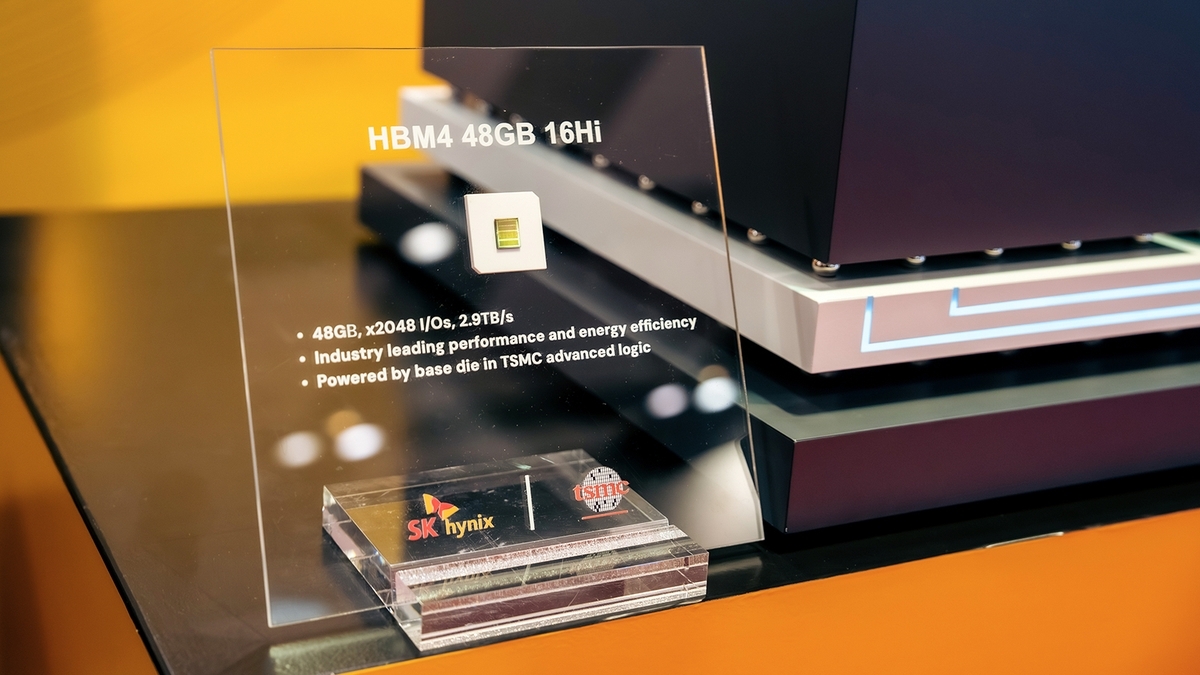
Those uncertainties come as South Korea confronts persistent technology leaks to China, particularly in industries where the two countries compete directly.
According to the National Office of Investigation, police detected 179 technology leaks in 2025, including 33 involving overseas transfers. China accounted for 18 of those 33. Five involved semiconductor tech, followed by display tech with four and secondary battery technology with three.
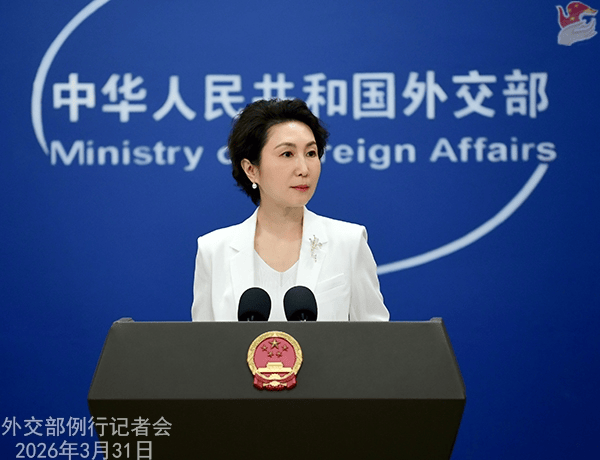
The Chinese Foreign Ministry responded shortly before the law took effect. Spokesperson Mao Ning said Friday that Beijing has consistently required Chinese companies to comply with international rules and local laws, while calling on other countries to provide a “fair, just and non-discriminatory” business environment.
Most detected cases involved insiders. Employees and executives were implicated in 148 of last year’s 179 cases, while small and midsized companies accounted for 155.
Lee Jong-hwan, a professor of system semiconductor engineering at Sangmyung University, said penalties in South Korea had historically been too weak even when technology theft was proven.
“In Korea, even proven technology theft often ended in suspended sentences or relatively short prison terms,” Lee said. “Elsewhere, conduct involving strategic technology and a foreign actor can be prosecuted as espionage and punished far more severely. This revision could begin to narrow that gap.”
But he cautioned against attributing China’s semiconductor rise to stolen technology alone.
“China’s semiconductor industry has grown on the back of massive state investment and stronger engineering capabilities of its own,” Lee said. “China would have reached this point anyway, but industrial espionage accelerated the timing.”
Lee also pointed to recruitment of former executives and senior engineers as a persistent leakage channel. Overseas companies can offer several times a worker’s previous salary, he said, while recruitment may be routed through paper companies or consulting firms elsewhere in Asia.
“By the time technology has already been taken, raising the punishment alone might be too late,” an industry official said. “What matters more is detecting high-paid recruitment approaches and contacts with former employees early, and extending security systems to smaller suppliers as well.”
Lawmakers are already seeking to tighten the statute. Rep. Koh Dong-jin of the People Power Party, a former Samsung Electronics president who led its mobile business, proposed an amendment last month that would explicitly cover foreign companies and national core technologies and raise the minimum sentence from three years to 10.
By Moon Joon-hyun (mjh@heraldcorp.com)

