




Lee In-hyung says NPS must turn new shareholder rights into lasting corporate change
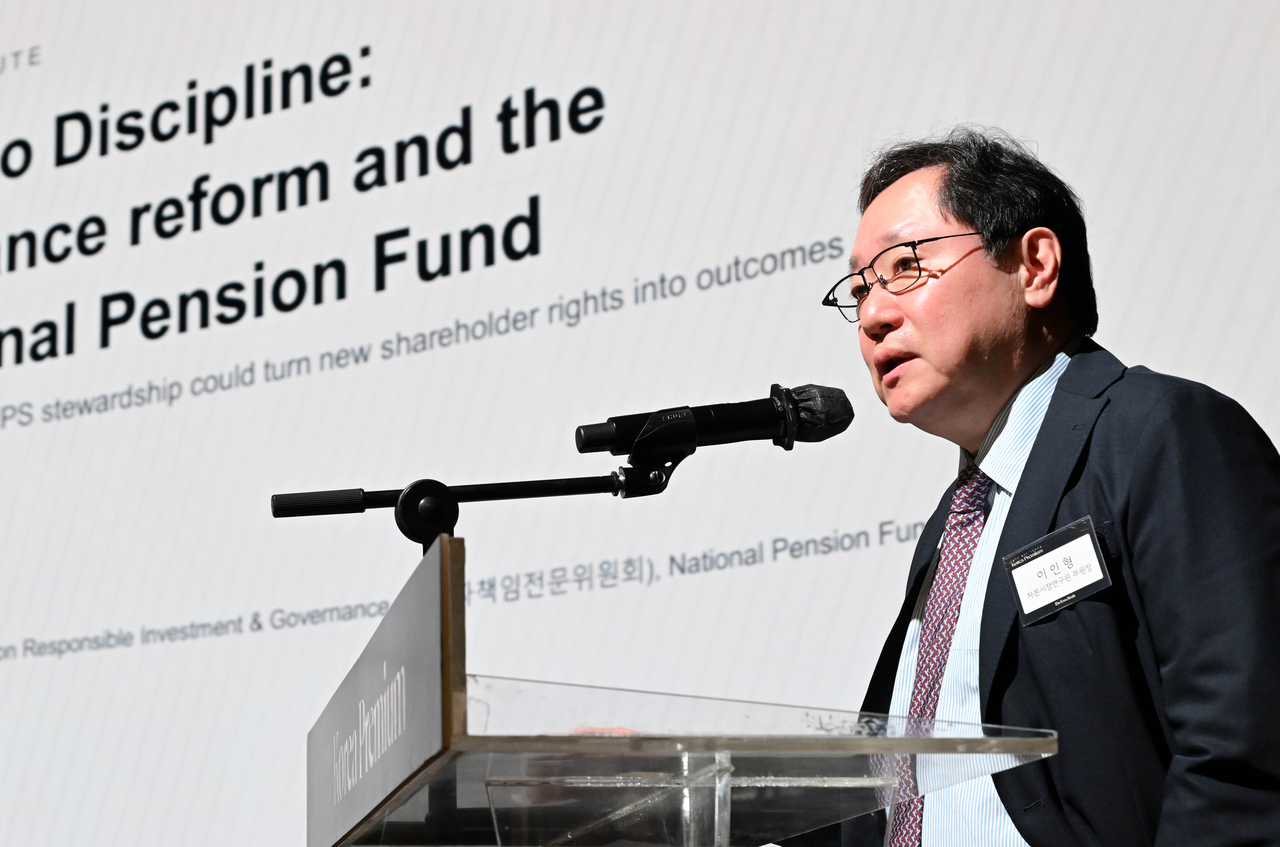
The success of Korea's sweeping governance reforms will hinge on whether new shareholder rights translate into effective market discipline and real changes in corporate behavior, with the National Pension Fund playing a critical role, according to Lee In-hyung, vice president of the Korea Capital Market Institute.
"A premium is not a status a market can assign to itself. It is a price that investors are willing to pay, and they pay when they are satisfied that the cash earnings of the company will eventually reach them," Lee said in a keynote speech at The Korea Herald's 2026 HIT Forum on Tuesday.
Lee argued that the Korea discount is not attributable to any single factor, but that governance is an important part of the price investors place on the market. Low shareholder payouts, which KCMI research found to have the strongest explanatory power for Korea's low valuations, are closely intertwined with governance and corporate ownership structures.
Recent reforms have sought to tackle those structures by expanding directors' duty of loyalty to shareholders, changing board election rules and restricting the use of treasury shares.
Some changes in corporate behavior are already visible, Lee said, pointing to increases in dividends, share buybacks and cancellations. But he cautioned that the broader market rerating seen since last year cannot yet be clearly attributed to governance reform, as the rise has been heavily driven by the semiconductor cycle.
"If you look closely, the median company did not rerate," he said.
Lee then turned to the NPS as a key player in determining whether the new legal framework produces lasting changes in corporate behavior. The fund holds stakes of at least 5 percent in 267 listed companies and is expected to remain a major shareholder in the Korean market for decades.
"The reform has created rights by reforming the Commercial Act, and we need the actor who can actually carry it out in this market," Lee said.
Its size matters, but so does its permanence, he stressed. "A company can wait out an activist fund, but it cannot wait out the National Pension Fund."
Lee said the coming shareholder meeting seasons will ultimately test whether changes written into law translate into practice.
"The Korea discount is never a single thing. It is a price investors charge for several things. Governance is one of them," he said. "The 2024 to 2026 reforms have changed the terms of the bargain in law. Whether they can change them in fact is a question that the shareholder meeting seasons of the future will answer."
By Choi Ji-won (jwc@heraldcorp.com)

