




CJ Olive Young saw 1 trillion won ($727 million) in annual foreign sales through August, putting it three months ahead of last year's pace, as tourists spread purchases past Seoul and across the country.
According to the retailer Monday, the milestone, which took until November to reach last year, came on 11.01 million foreign transactions over the same period, or roughly one purchase every 0.9 second during store hours.
Foreign shoppers, who came from 192 countries and territories according to tax refund data, now account for 33 percent of Olive Young's in-store sales, up from just 2 percent in 2022. Customers from the United States, Singapore, Japan, China and Thailand were the top five spenders this year.
While foreign sales rose 47 percent nationwide in the period, growth outside Seoul was sharper, led by Gangwon Province's 105 percent jump, followed by Gyeongju in North Gyeongsang Province, Daejeon and Jeonju, North Jeolla Province, at 88 percent, 80 percent and 62 percent, respectively.
Olive Young credited the trend to its rollout of large-format stores and regionally themed shops, saying tourists increasingly hop between several locations during a trip. In a company survey, foreign customers visited an average of 2.8 stores during visits to its tourism-zone locations in May.
"As Korea enters an era of 20 million annual visitors, we will deepen our role as tourism infrastructure through large-format and regionally specialized stores, in Seoul and beyond," an Olive Young official said.
Olive Young plans to keep launching stores outside Seoul that spotlight local character, including major overhauls in hub cities like Busan and on Jeju Island to match surging tourist demand, while fine-tuning store operations based on foreign customers' tastes and expanding artificial intelligence-backed language support.
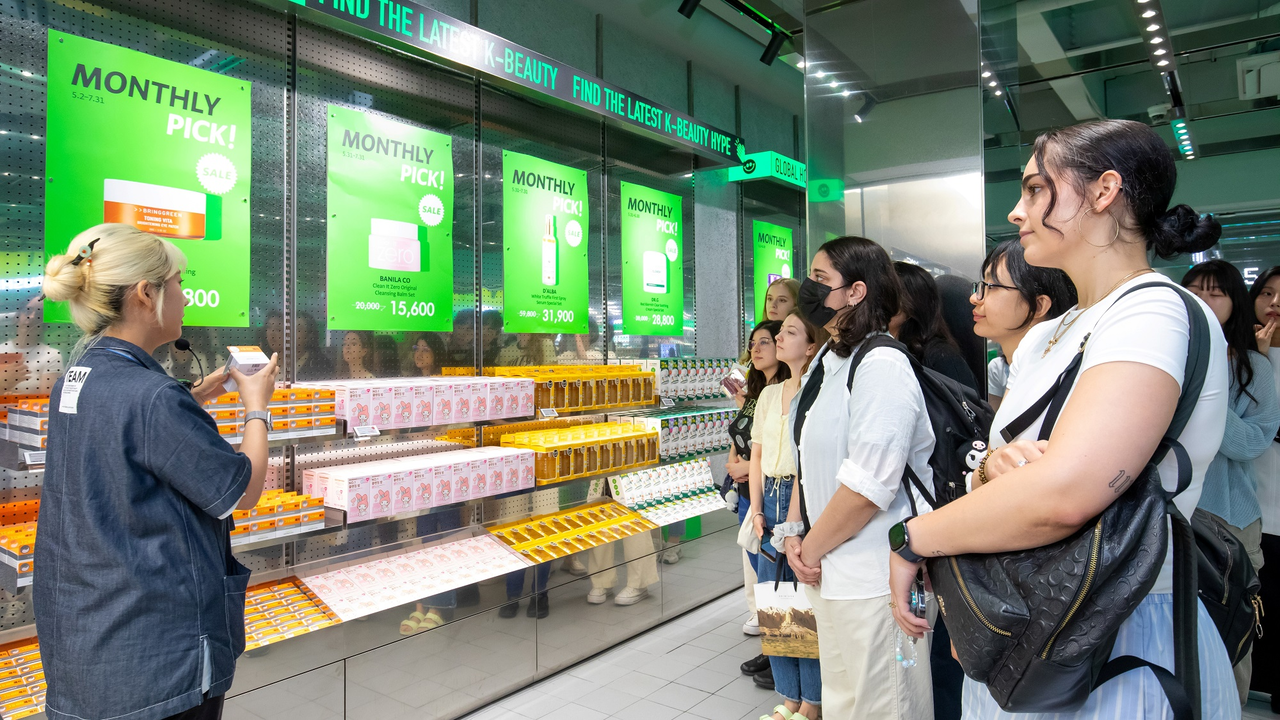
The company has set aside 151 stores, more than 10 percent of its total, as tourist-focused locations, staffing them with multilingual employees and signage.
By No Kyung-min (minmin@heraldcorp.com)

