




Product chief Neil Hughes bets on SUV demand, performance-focused S lineup to drive growth
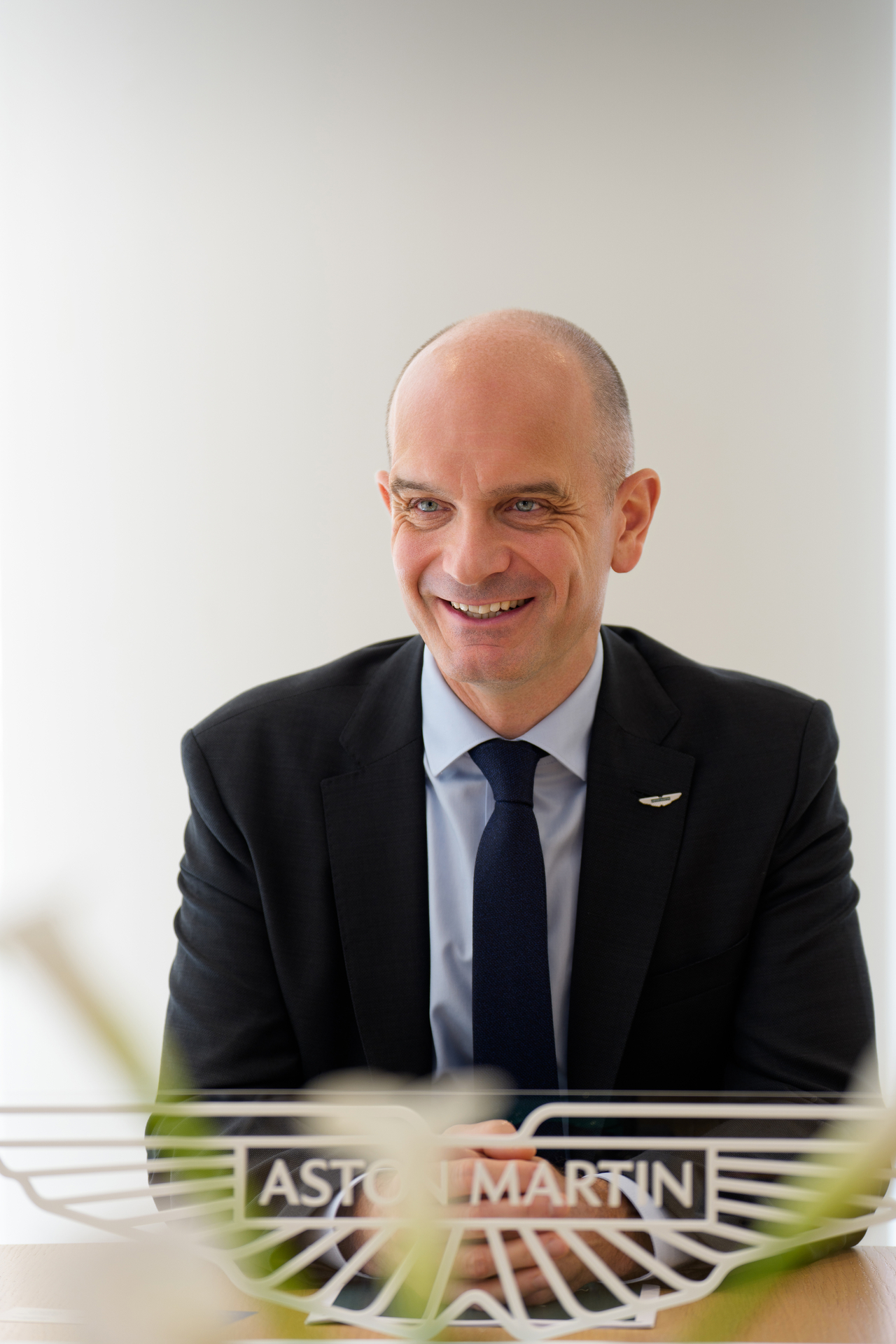
Aston Martin has launched three high-performance S models in Korea in its largest-ever local product rollout, betting that the country could soon become its second- or third-largest market in the Asia-Pacific region.
The British luxury carmaker unveiled the DB12 S Super Tourer, Vantage S sports coupe and DBX S SUV, as it seeks to accelerate its expansion in Korea.
Neil Hughes, head of product management at Aston Martin, said the broad product update reflects Korea’s rapid emergence as an important market for luxury and high-performance vehicles.
“We expect South Korea to become a very strong third, possibly even second, in the marketplace over the next year or so,” Hughes said in an interview with The Korea Herald in Seoul on Monday.
Japan is currently Aston Martin’s largest market in the Asia-Pacific region, followed by Australia and New Zealand.
Hughes said the DBX SUV would serve as a central pillar of the company’s Korean expansion, capitalizing on the country’s strong demand for sport utility vehicles.
Amid competition from ultraluxury rivals ranging from Bentley to Ferrari, Aston Martin is seeking to carve out a distinct position by combining bespoke craftsmanship with the performance of a sports car.
Unlike Bentley and Rolls-Royce, which place greater emphasis on luxury and comfort, Aston Martin combines handcrafted interiors with performance-focused engineering across a lineup that includes the Vantage sports car, DB12 Super Tourer and DBX SUV, Hughes said.
The company believes this positioning will appeal to Korean buyers who favor understated design and driving performance over more conspicuous expressions of luxury.
Asked why Aston Martin is not moving as aggressively into high-performance electric vehicles as some competitors, Hughes said electrification was not “the single answer” to reducing emissions.
Although the latest electric power trains can easily produce 1,200 horsepower, adding more power does not necessarily create a more engaging or comfortable driving experience, he said.
“If we look at some of the market leaders — Porsche, for example — they’ve come in with their fully electric products and they’ve not had the customer response that they expected, so they’ve had to change their plans at huge cost to the company,” Hughes said.
Bentley is preparing to launch its first fully electric model, the Torcal SUV, built on a Volkswagen Group EV platform. The automaker has scaled back its previous target of becoming fully electric by 2030 amid slower-than-expected demand.
Ferrari’s Luce, unveiled in Korea on Monday, represents a low-volume expansion of its portfolio rather than an immediate departure from the V8 and V12 combustion engines at the core of its lineup.
Aston Martin, meanwhile, is emphasizing weight reduction across its latest S models to sharpen performance and handling.
Optional magnesium wheels and carbon-fiber body panels reduce the DBX S’s weight by as much as 47 kilograms compared to the DBX707. The Vantage S can shed up to 38 kilograms through carbon-ceramic brakes and carbon-fiber seats, while the DB12 S saves 11.7 kilograms through its titanium exhaust system alone.
The lightweight strategy builds on Aston Martin’s bonded aluminum architecture, which the company has refined for more than two decades. Developing its own platform gives the carmaker greater control over weight, proportions and driving dynamics. Beyond the S-lineup, Hughes noted Aston Martin will launch tailored new products in Korea over the next three to six months.
By Byun Hye-jin (hyejin2@heraldcorp.com)

