




Chipmaker secures five-year supply deals as HBM demand drives capacity expansion
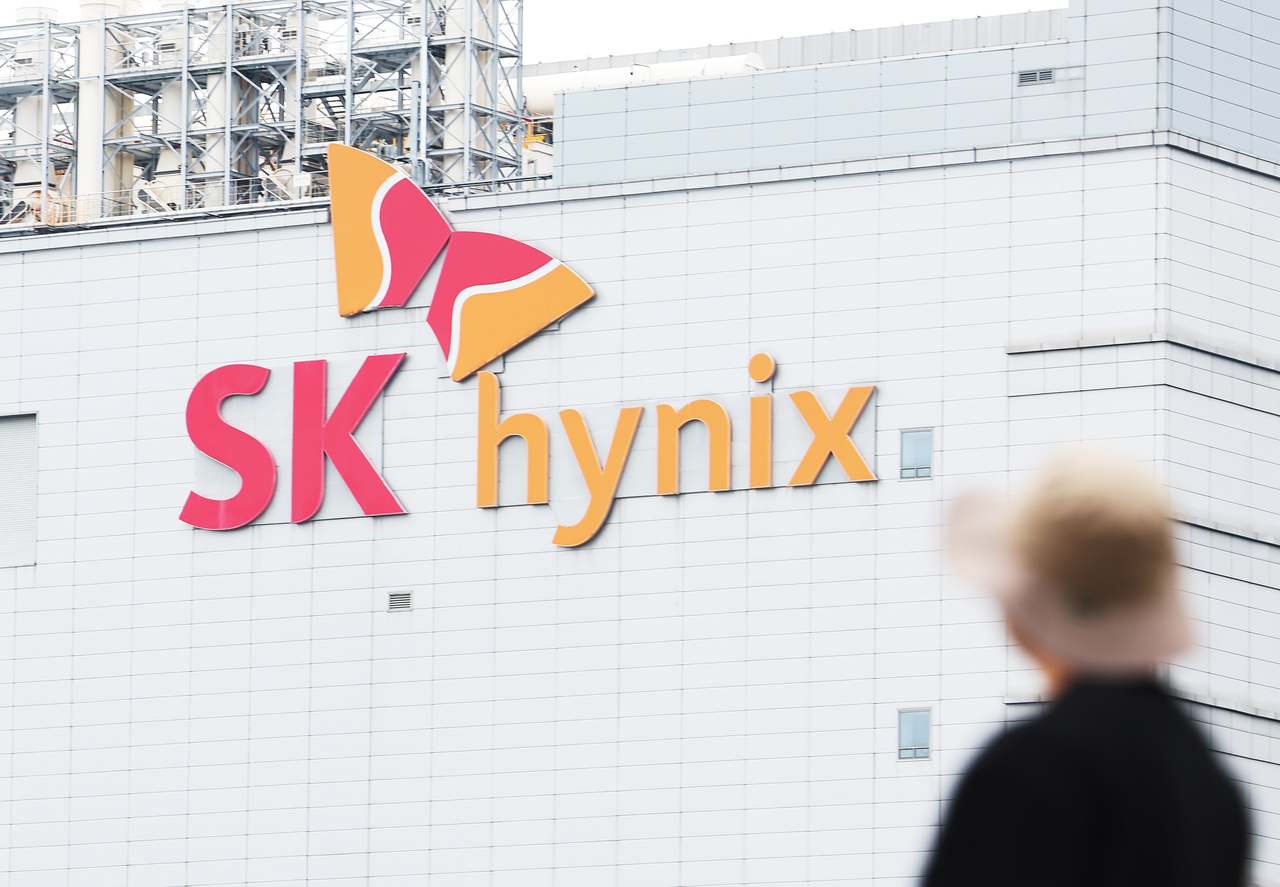
SK hynix reported the largest quarterly profit in its history on Wednesday and said it expects capital spending this year to reach the high 40 trillion won range, a figure that commits most of the quarter's earnings to building more capacity.
Operating profit for the April-June period came to 60.54 trillion won ($41.9 billion), up 557.2 percent from a year earlier and 61 percent from the first quarter. Revenue rose 256.8 percent on-year to 79.32 trillion won.
One quarter now exceeds what the company earned in all of 2025, when operating profit was 47.21 trillion won. Its operating margin reached 76 percent, four points above the previous three months, and its first-half revenue of 131.9 trillion won cleared 100 trillion won for the first time in six months.
The company's net profit of 93.92 trillion won, up 1,242.5 percent, needs a qualifier. It includes 63.3 trillion won in gains from selling and revaluing investment assets, most of which is from the company's stake in Japanese flash memory maker Kioxia.
Neither headline figure met what analysts had predicted. A survey by FnGuide put revenue at 82.58 trillion won and operating profit at 63.15 trillion won. Blended DRAM average selling prices rose about 30 percent, short of market assumptions, which the company attributed to shipments of some high-value products being "carried over to the second half."

Management spent much of the earnings call arguing that the demand behind the spending is real. The high 40 trillion won guidance reflects a decision to pull forward mass production at the M15X fab and to invest so output can scale quickly once the clean room at the first Yongin plant opens in early 2027.
Asked about big technology firms slowing data center commitments, executives said the moves "look less like a scaling back of AI investment than a process of raising utilization of the infrastructure already built and beginning to monetize it." On the risk of building too much, the company said capacity will expand "flexibly, based on confirmed demand," and that the chance of its investment plans leading directly to oversupply is "limited."
Contracts are the evidence it offered. SK hynix has finished negotiating long-term supply agreements with about 10 customers and set out the terms publicly for the first time. Five years is the typical run. The deals carry purchase commitments and deposits meant to hold customers to their orders, which executives described as going beyond simple volume supply toward joint development of next-generation memory.
They declined to say what share of sales the agreements cover.
Talks with major customers over 2027 volumes and pricing for high-bandwidth memory, the stacked DRAM that feeds Nvidia's AI accelerators, are still running. HBM4 entered mass production shipment in the second quarter with yields approaching those of the mature HBM3E generation, and HBM4E samples have reached major customers ahead of volume production targeted for 2027.
Cash and equivalents rose to 88 trillion won and net cash to 69.4 trillion won, lifted by the Kioxia proceeds and the July 10 Nasdaq listing of American depositary receipts. SK hynix said it is reviewing additional shareholder returns and will disclose specifics before the year's end.
The record results offered little support to SK hynix shares amid a broader market sell-off. SK hynix touched an intraday high of 1,619,000 won before reversing, closing down 9.61 percent at 1,401,000 won, while Samsung Electronics fell 5.23 percent. The Korea Exchange halted trading for 20 minutes on both the Kospi and the Kosdaq early in the afternoon, the first time circuit breakers have triggered on consecutive sessions. The Kospi closed down 5.98 percent.
By Moon Joon-hyun (mjh@heraldcorp.com)

