




Chinese electric vehicle makers are rapidly expanding into Korea, with premium EV brand Zeekr emerging as a new challenger to Hyundai Motor’s Ioniq lineup in the premium mainstream segment, while BYD intensifies price competition against mass-market models from Kia.
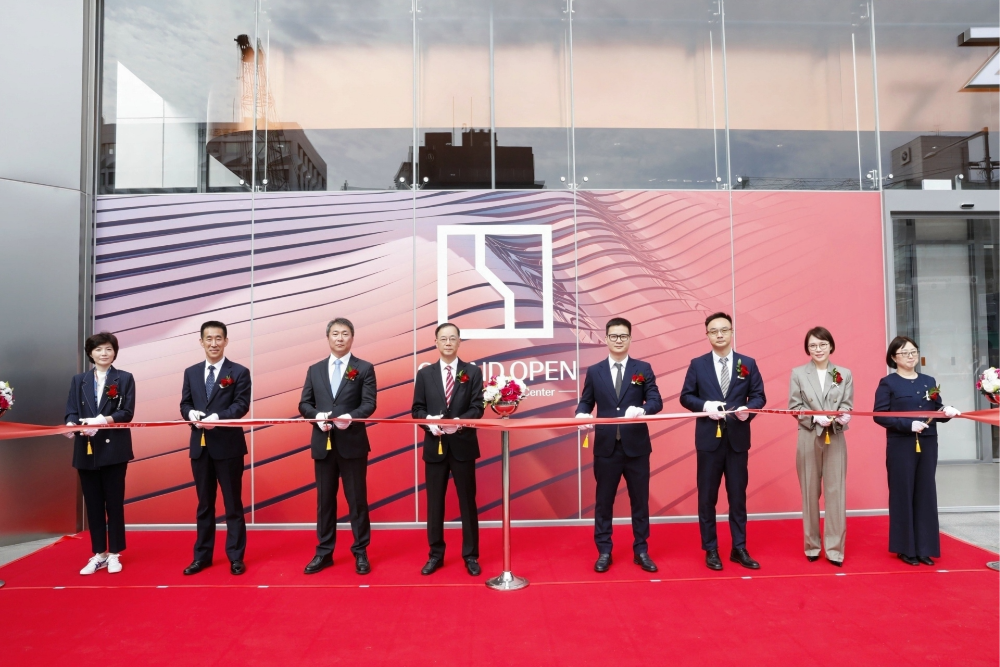
On Friday, Zeekr Korea celebrated its debut, with the opening of its brand showroom in Gangnam, Seoul, attended by key officials, including Zeekr Korea CEO Lim Hyun-ki, Zeekr International Chief Operating Officer Jeff Cao and Zeekr International CEO Chen Yu.
The first model to spearhead Zeekr’s entry into the Korean market will be the midsize 7X SUV, reflecting strong local preference for SUVs. Slated for launch in the later half of this year, the 7X will be the first facelifted version introduced outside China.
The 7X is built on its parent company, Geely’s 800-volt Sustainable Experience Architecture platform, which supports Zeekr’s entire lineup from compact to large vehicles. The 7X highlights ultrafast charging — capable of going from 10 percent to 80 percent charge in approximately 10.5 minutes — along with a driving range of up to 615 kilometers under European WLTP standards and an advanced intelligent software architecture.
Given the 7X’s segment and price range estimated between 50 million won to 60 million won ($34,000-$40,900), the closest competitor is likely to be Hyundai’s Ioniq 5 SUV. The flagship battery-powered vehicle sold over 10,000 units in Korea last year as the brand’s bestselling EV.
Meanwhile, BYD Korea, following its successful debut last year, is creating pressure from the opposite end of the market. Leveraging strong price competitiveness in the mass-market EV segment, BYD is emerging as a direct challenger to Kia’s EV lineup.
The BYD Atto 3 compact crossover SUV competes with the Kia EV3, while the BYD Seal mid-size sedan targets the Kia EV6. The BYD Dolphin hatchback is positioned against models such as the Kia Ray EV and Niro EV. In the entry-level EV segment priced around the 10 million won to 20 million won range, the BYD Seagull is also expected to face off against the Hyundai Casper Electric.
An industry source said, “Zeekr and BYD are showing strong commitment to penetrating Korea’s EV market, which has long been dominated by Hyundai and Kia.”
“Executives at their Korean operations are negotiating more competitive pricing for Korea than in other Asia-Pacific markets to attract local consumers. Backed by advanced EV technologies, once they secure an initial customer base, the brands could benefit from strong customer lock-in and expand their market share in Korea,” the source added.
According to the Korea Automobile & Mobility Association, 220,177 EVs were newly registered in Korea last year. By automaker, Kia ranked first with 60,609 units sold, accounting for 27.5 percent of the market, followed closely by Tesla with 59,893 units, or 27.2 percent. Hyundai came in third with 55,461 units, representing 25.2 percent.
Notably, sales of Chinese-made EVs surged 112.4 percent from a year earlier to 74,728 units, accounting for a 33.9 percent market share. KAMA said the sharp increase came amid rising imports of China-produced Tesla Model Y vehicles, along with the expanding presence of brands with China-based production operations, including BYD and Polestar.
By Byun Hye-jin (hyejin2@heraldcorp.com)

