




HBM revenue seen growing more than threefold in 2026, as chip business drives record quarterly profit
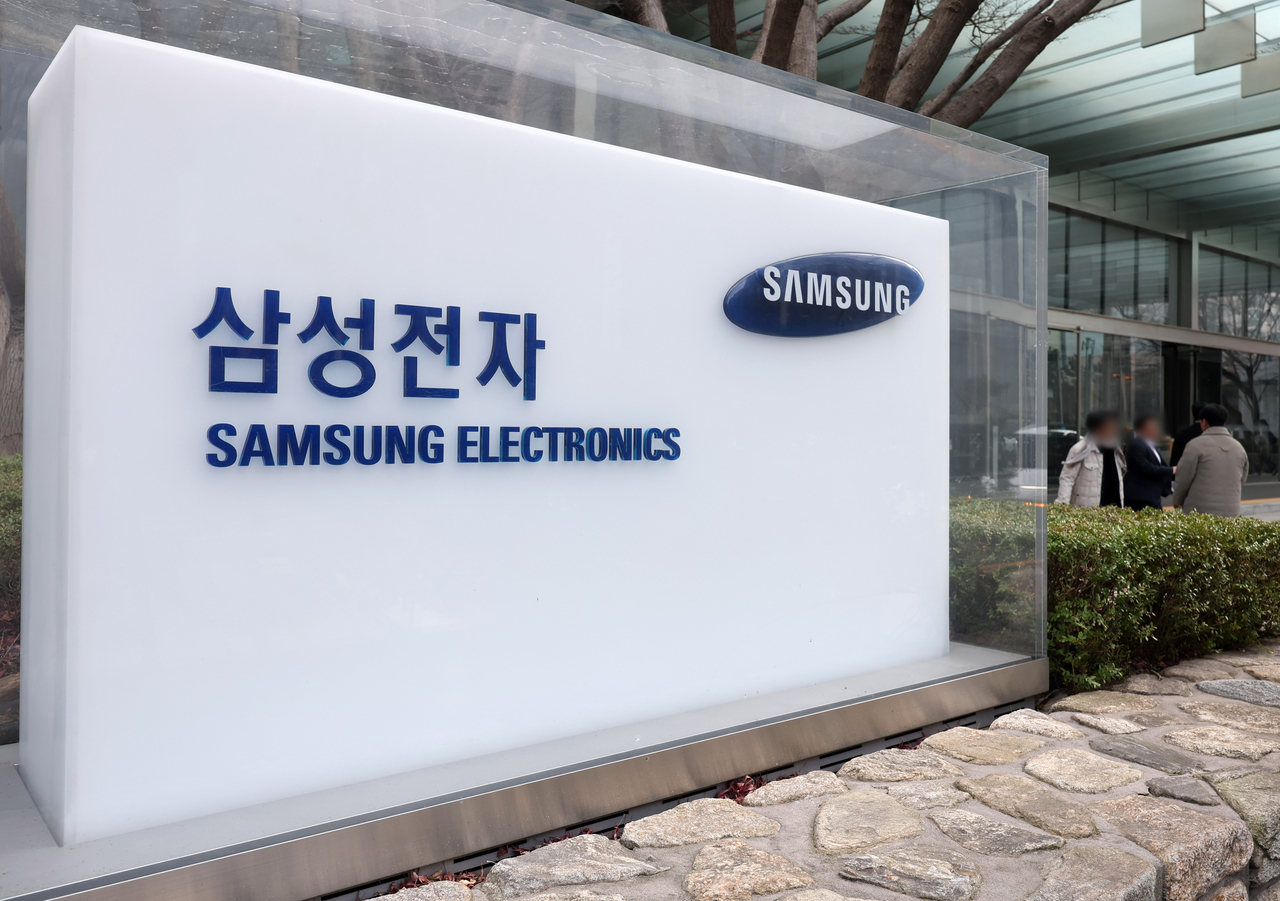
Samsung Electronics said Thursday it will focus on high-value memory products, including high-bandwidth memory and server chips, as supply shortages triggered by the artificial intelligence boom are expected to persist for some time.
Kim Jae-june, executive vice president of the memory division, said during the tech giant’s first-quarter earnings conference call that AI-related demand would continue to drive growth in the memory market.
“Demand for next year is already being placed in advance by customers concerned about supply shortages,” Kim said. “Based on these orders alone, the supply-demand gap next year is expected to become even more severe than this year.”
Samsung has already signed long-term agreements with some customers, allowing for greater stability and visibility as it responds to market changes.
Kim also gave an update on Samsung’s next-generation HBM strategy. Samsung’s sixth-generation HBM4 chips, which the company said began mass-production shipments in February for the first time in the world, are being ramped up as planned, with supply set to expand in earnest in the second half.
“HBM4 sales will account for more than half of total HBM revenue from the third quarter, and will also make up a majority for the full year,” Kim said. “This year’s HBM revenue is expected to grow more than threefold from a year earlier.”
Samsung plans to ship samples of HBM4E, its seventh-generation HBM product, in the second quarter.
The foundry business, meanwhile, is seeking to regain momentum.
Kang Suk-chae, executive vice president of the foundry division, said the company would concentrate its resources on high-value specialty demand in mature, or legacy, processes where technological barriers remain relatively high, while cutting back on less competitive processes.
“We will improve the fundamentals of the business with an optimized product mix that takes profitability and investment efficiency into account,” Kang said.
Regarding the company’s plant in Taylor, Texas, Kang said the first fab held an equipment move-in ceremony the prior week, while the second fab is under early review in line with discussions with global customers.
The Taylor site is designed as a production base for Samsung’s advanced 2-nanometer process. It is expected to begin initial operations later this year, with mass production for major customers, including Tesla, likely to start next year.
Kang said Samsung is in active talks with a number of major customers over 2nm cooperation, adding that the company expects to see tangible progress with some clients in the near future.
He also said Samsung is discussing the adoption of 2-nanometer and 4-nanometer processes with multiple robotics customers in the US and China.
Labor risks also came up during the call, with Samsung’s union coalition planning a walkout next month. Chief Financial Officer Park Soon-cheol said the company would work to prevent any production disruptions even in the event of a strike.
“Even if a strike takes place, we plan to respond as much as possible within legal boundaries through a dedicated organization and response system so that production disruptions do not occur,” he said.
Samsung’s union coalition has announced a general strike from May 21 to June 7, demanding that 15 percent of operating profit be paid out without a cap.
Samsung also plans to continue heavy investment to maintain its technology lead. The company spent 11.3 trillion won ($7.6 billion) on research and development in the first quarter alone, and its combined R&D and capital expenditure for the year is expected to exceed 110 trillion won for the first time in its history.
Ahead of Thursday’s conference call, Samsung reported that its first-quarter operating profit jumped 756.1 percent on-year to 57.23 trillion won, hitting a quarterly high as its chip business accounted for the bulk of earnings.
Revenue rose 69.2 percent on-year to 133.87 trillion won in the January-March period, while net profit climbed 474.3 percent to 47.23 trillion won, the company said in a regulatory filing.
Both revenue and operating profit were the highest ever for a single quarter. The figures also surpassed the previous records set in the preceding quarter, when Samsung reported 93.84 trillion won in revenue and 20.07 trillion won in operating profit.
Samsung’s device solutions division, which oversees its semiconductor business, posted 81.7 trillion won in revenue and 53.7 trillion won in operating profit. The chip division accounted for most of Samsung’s quarterly profit, driving the record earnings.
The device experience division, which handles finished products such as smartphones, TVs and home appliances, reported 52.7 trillion won in revenue and 3 trillion won in operating profit.
Samsung Display posted 6.7 trillion won in revenue and 400 billion won in operating profit, while Harman International, Samsung Electronics’ automotive affiliate, logged 3.8 trillion won in revenue and 200 billion won in operating profit.
By Jie Ye-eun (yeeun@heraldcorp.com)

