




Weak demand, rising costs and China competition weigh on consumer electronics division
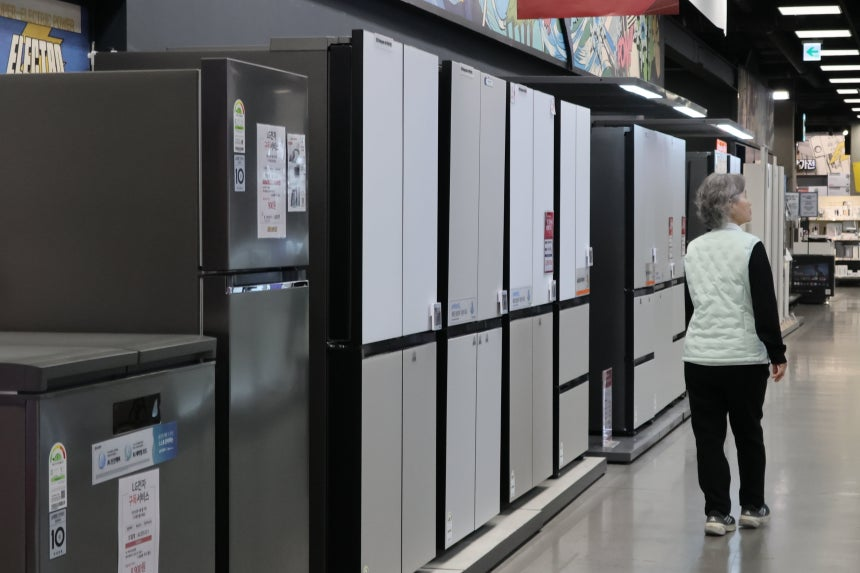
Samsung Electronics has begun restructuring parts of its consumer electronics business, including dishwashers and microwave ovens, as it pivots toward profitability amid weakening demand and rising costs, industry sources said Wednesday.
The move comes despite record first-quarter earnings driven by a semiconductor boom, underscoring a widening gap between its chip business and consumer divisions.
Samsung’s device appliances division, which oversees home appliances, recently outlined a restructuring road map and mid- to long-term strategy in an internal briefing, according to the sources.
The plan focuses on streamlining lower-margin segments by discontinuing select small- and midrange product lines and shifting production to external partners through joint development manufacturing, original equipment manufacturing and original design manufacturing.
The company is also reviewing the possible closure of its Malaysia plant, established in 1989 and focused on mass-market appliances such as microwave ovens.
“We are enhancing production efficiency and competitiveness in response to changes in global demand and the business environment,” a Samsung official said, adding that details will be adjusted flexibly depending on market conditions.
The overhaul highlights mounting pressure on Samsung’s appliance business, where profitability has deteriorated amid rising component and logistics costs and intensifying price competition from Chinese rivals. Analysts estimate the company’s TV and appliance division posted an operating loss of about 300 billion won ($203 million) in the first quarter, following a 600 billion won loss in the previous quarter.
The broader market environment has also turned less favorable, with slowing global demand, currency volatility and geopolitical risks weighing on consumer spending. Industry watchers increasingly see the global appliance market entering a low-growth phase.
In response, Samsung plans to scale back low-margin products and double down on premium offerings, including its Bespoke lineup of refrigerators, washing machines and air conditioners.
At the same time, the company is expanding into higher-value segments such as heating, ventilation and air conditioning, business-to-business solutions and subscription-based appliance services.
Samsung has also rolled out a range of artificial intelligence-powered home appliances this year, including refrigerators, washing machines, air conditioners and robot vacuum cleaners, as part of its push to strengthen its premium positioning. It is also building dedicated teams to target enterprise clients, leveraging its SmartThings platform to deliver integrated AI home solutions.
The restructuring is part of a broader global realignment. Samsung has scaled back shipments and distribution in China and is streamlining its production footprint in Europe. Last month, it decided to shut down its TV plant in Galanta, Slovakia, citing weakening profitability amid slowing demand and rising costs.
In China, the company plans to halt direct sales of its home appliances, shifting entirely to an agency-based model.
Meanwhile, Chinese competitors such as TCL and Hisense are gaining ground, leveraging aggressive pricing and mini-LED technology. According to Counterpoint Research, Samsung still leads the global TV market with a 15 percent share, but TCL and Hisense are closing the gap, with 13 percent and 12 percent, respectively.
By Jo He-rim (herim@heraldcorp.com)

