




Botulinum toxin exports surge as Daewoong expands global training

Daewoong Pharmaceutical is stepping up efforts to expand the global footprint of Nabota, its high-purity botulinum toxin, as demand for anti-aging treatments rises worldwide.
The company launched the Nabota Master Class in 2023 to train overseas medical professionals, as exports of the product gained momentum. Nabota exports reached 193 billion won ($131.1 million) last year, nearly quadrupling from 2021.
Originally held in Korea, the program has expanded overseas, with sessions in markets such as Argentina and Saudi Arabia to target regional demand.
“More young people are getting botulinum toxin treatments,” said Renata Primavera, a Brazilian dermatologist with 24 years of experience, speaking on the sidelines of the NMC at Ewha Womans University Seoul Hospital on Wednesday.
“Pre-juvenation is about managing aging in advance to maintain skin over the long term, rather than treating problems after they occur,” she said. “This shift toward preventive care is happening globally, not just in Brazil.”
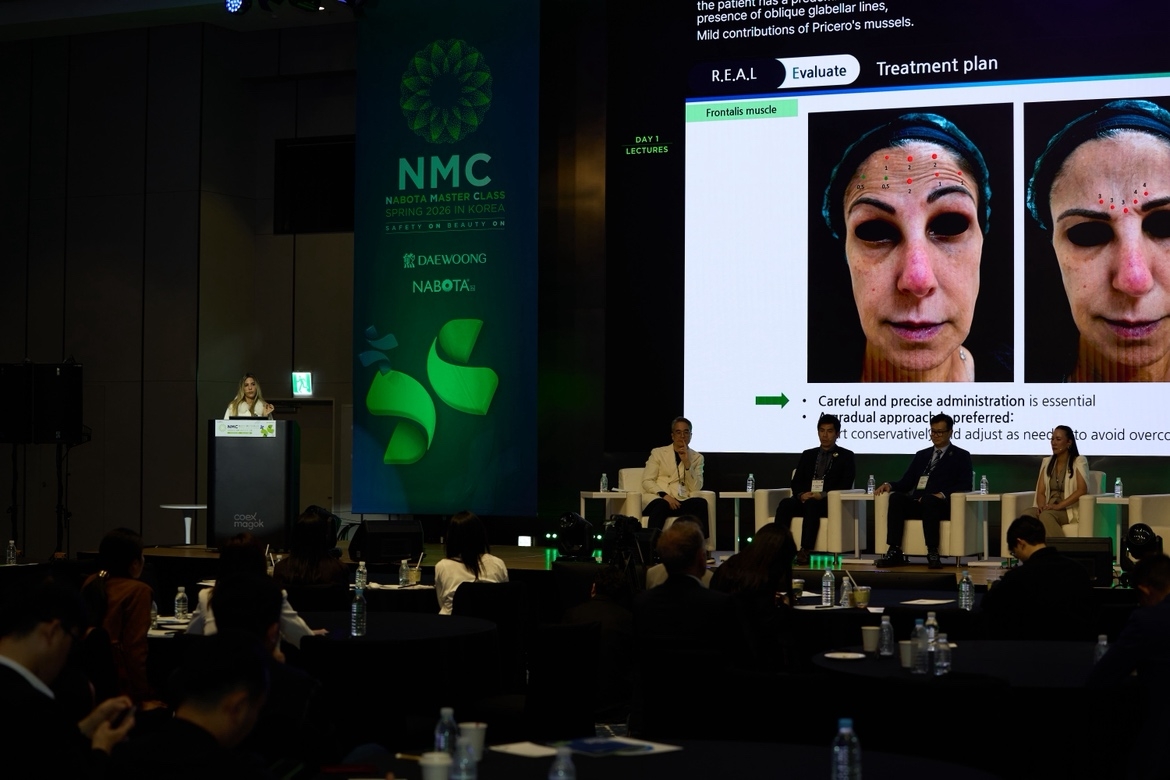
The latest NMC invited 74 medical experts from 13 countries to showcase Nabota’s safety and quality while sharing clinical cases of Nabota use among the participants and providing a closer look at the botulinum toxin products’ manufacturing process. Daewoong Pharmaceutical also offered hands-on training for various Nabota procedures to improve skin lifting, skin texture, skin tone and pore issues.
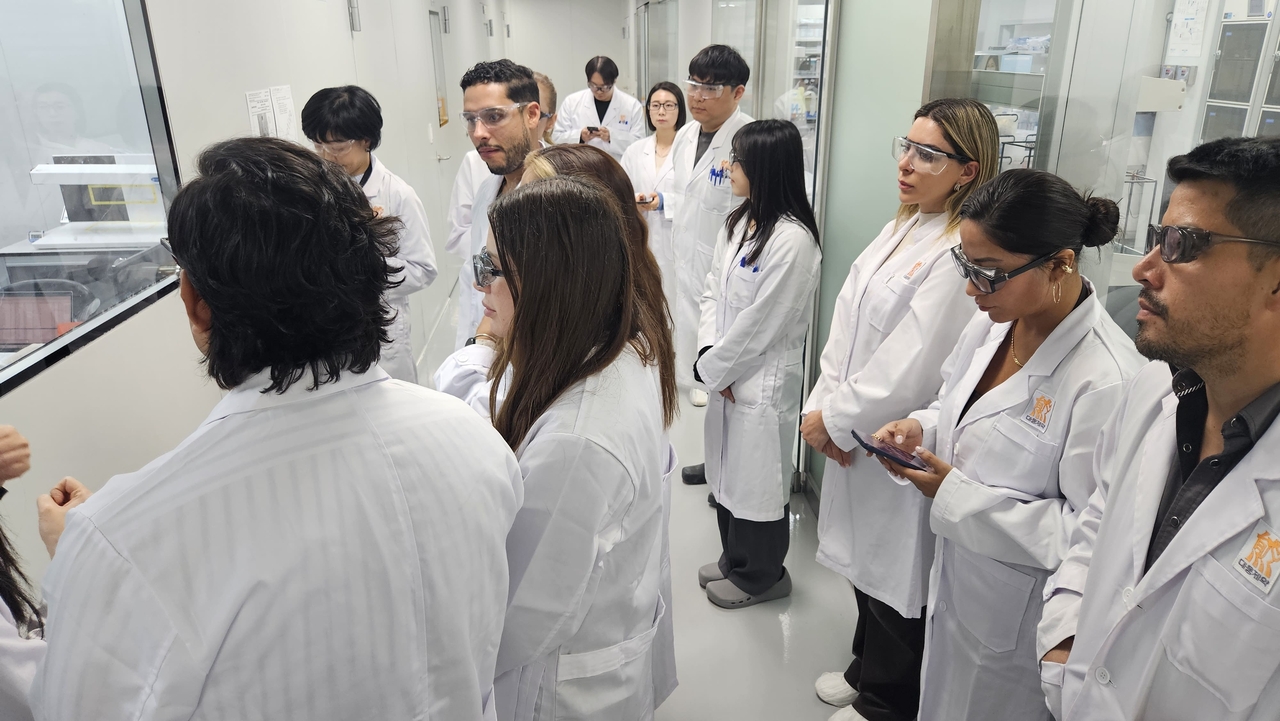
“We were able to check out the actual procedure method, not just a theoretical introduction, and through this, I gained an important vision to increase the precision,” said the Brazilian doctor.
“It was a very meaningful experience because we learned technical expertise that can be used in clinical cases right away.”
Noting that Nabota reduces the occurrence of inactive toxin through a vacuum drying process, she pointed out that this contributes to its consistency, safety and predictability.
Primavera then introduced her case of treating a patient’s uneven eyebrows that happened after a stroke surgery in Brazil, saying that she had previously used various toxins, but Nabota showed particularly faster onsets.
“In a Nabota study, about 84.5 percent of patients demonstrated onsets within two days of (the toxin procedure),” said the Brazilian doctor. “This patient also saw her uneven eyebrows and wrinkles get better in a short period of time.”
Daewoong Pharmaceutical has been aggressively expanding its botulinum toxin presence in Latin American countries. After debuting Nabota in Panama in 2015, the company has entered 17 countries in the region, including key markets in Brazil, Argentina, Colombia, Peru and Chile. The company inked a 180-billion-won contract to export Nabota products to Brazil last year.
According to Primavera, the presence of Nabota is expanding in Brazil as the country puts importance on seeing quick results after a procedure. She added that the Korean-made label is having a positive impact on Nabota, as trust in Korean products is very high, with a favorable understanding of Korea’s skin care and beauty sectors among the Brazilian public.
“As (the NMC) gathered doctors from different cultural backgrounds, I had a chance to broaden my vision by listening to others’ clinical cases and experiences. I think this will help me offer better results to my patients,” she said.
“I have been to numerous international conferences, but this is the first time that I saw such a well-organized program. It was a very meaningful experience, and I hope this program continues.”
By Kan Hyeong-woo (hwkan@heraldcorp.com)

