




Chung Tae-young says structure, not algorithms, will define competitiveness
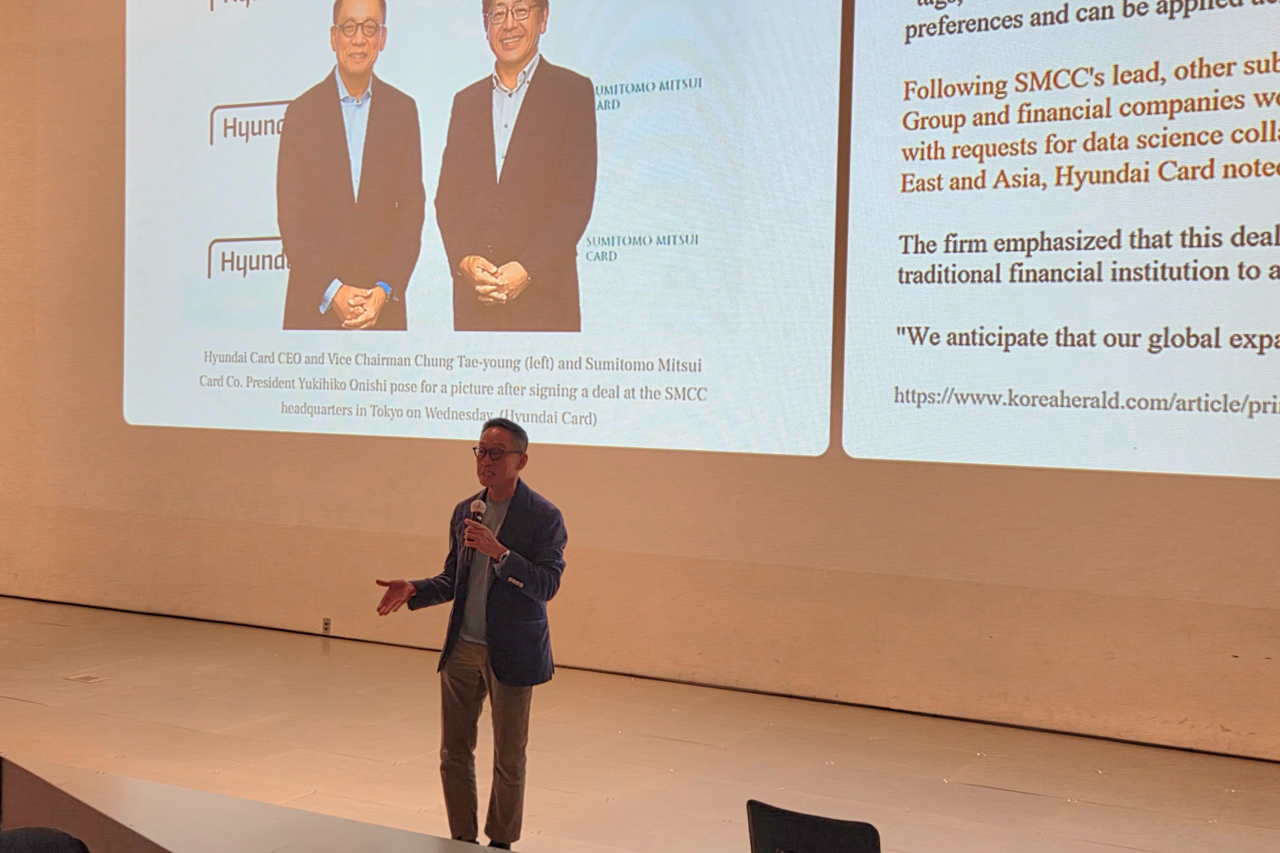
"Architecture becomes even more important in the online era."
Seemingly far removed from architecture, the remark by Hyundai Card CEO and Vice Chair Chung Tae-young -- a 23-year veteran of the finance industry and an entrepreneur -- at a rare open lecture at Seoul National University’s architecture department on Tuesday was not merely a reassurance for students anxious about their careers, but a precise expression of the management philosophy that underpins the way he runs Hyundai Card.
For Chung, architecture is not confined to concrete and windows. It's a way of organizing thought. "We are people who create order, nothing more and nothing less," he said. The principles of order, proportion, modularity and system that he draws from Bauhaus, Le Corbusier and Giuseppe Terragni extend beyond buildings to companies, which, he argues, must be built with the same structural discipline and internal logic.
That discipline runs through Hyundai Card. Its products are designed as part of a larger modular system, with each card occupying a defined place in the lineup, while its underwriting engine is structured so coherently that screening can be completed in as little as five seconds. The same rigor shapes its apps and physical spaces, where Hyundai Card controls the hidden architecture of user experience, from information density and scrolling feel to how far each product can diverge from the brand’s core identity.
"Even our organizational chart is highly architectural — from how divisions and teams are structured to how we break through silos and how people move across departments, all of that is designed."
That philosophy also explains why Chung believes the rise of technology and artificial intelligence will make architecture more, not less, important. As more transactions move online, he said, demand may fade for typical physical spaces. But that only raises the value of spaces that offer something screens cannot. He compared it to music: Even in an age of lossless digital files, vinyl records continue to sell because convenience does not erase the desire for a tangible experience.
"People cannot fully satisfy all their senses through a screen," he said. "Demand may decline for generic buildings valued only by the square foot, but the need for great, meaningful architecture that truly satisfies people will only grow more urgent."
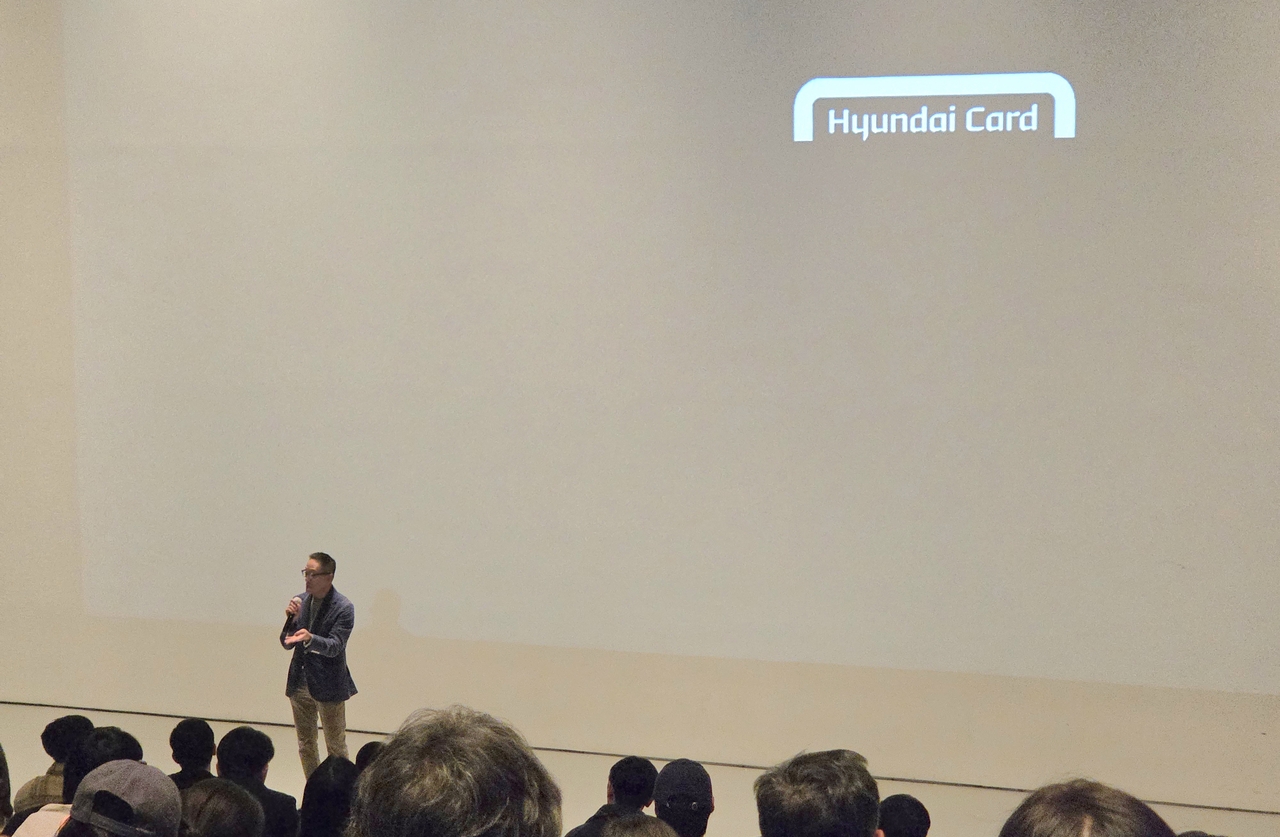
Chung put the point in blunter commercial terms. Hyundai Card once spent as much as 80 billion won ($54.3 million) a year on television advertising, he said, but now gets something close to free promotion as visitors post its spaces on Instagram. Many of those properties have also doubled or tripled in value, he said.
After more than 15 years of investing in architecture, Hyundai Card and Hyundai Commercial, sister finance companies under Hyundai Motor Group also overseen by Chung, now have about 50 spaces, offices and other architectural projects across 13 countries, he said. Those include branded venues in Seoul such as the Design Library and Cooking Library.
The same thinking underpins Hyundai Card’s AI push. "We’re not trying to build our own large language model. The real bet is on data architecture," Chung said. He described that work as foundational: defining what counts as a single unit of data, deciding whether similar phrases carry the same meaning and building the grammar that makes data usable across an organization.
"Without that structure, companies may think they have data when in fact they only have disconnected words," Chung said.
Hyundai Card has spent about 500 billion won on that architecture, part of more than 1 trillion won in total AI investment, Chung said. The company is now building seven private clouds on the assumption that LLMs will become core management infrastructure within two years.
"By then, LLMs will be capable of handling financial statements, legal work and even human resources," he said. "Just as runways must be laid before planes can take off, we are doing the groundwork now for where the technology will be two years from now."
By Choi Ji-won (jwc@heraldcorp.com)

