




Talks with Palantir, Skild AI focus on execution, physical AI strategy
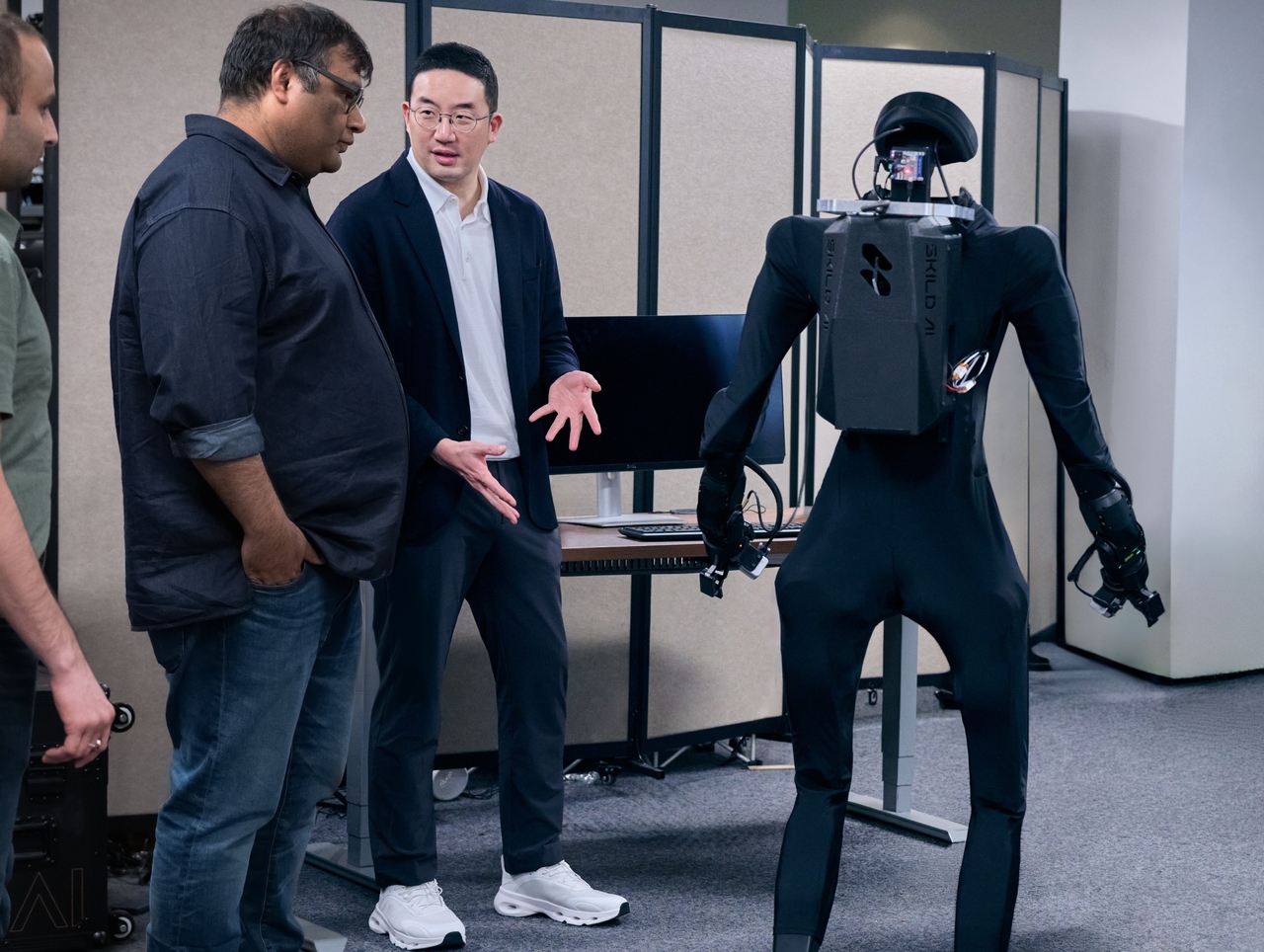
LG Group Chairman Koo Kwang-mo is stepping up the conglomerate’s artificial intelligence transformation strategy, holding back-to-back meetings with leading AI companies in Silicon Valley to sharpen execution and define priorities in emerging AI fields.
LG said Tuesday that Koo met executives from Palantir Technologies and Skild AI on Thursday in Silicon Valley, discussing ways to accelerate LG’s AI transformation, or AX.
The trip is widely seen as an effort to clarify LG’s commercialization roadmap for AI and set priorities in physical AI, a fast-emerging sector where software intelligence meets real-world systems.
Palantir and Skild AI are considered leaders in their respective domains — enterprise AI platforms and robot intelligence — making them key partners as LG pushes to translate AI capabilities into tangible business outcomes.
In his meeting with Palantir, Koo sat down with CEO Alex Karp and senior executives to explore the company’s Ontology platform, AI-driven decision-making systems, and real-world applications.
Ontology goes beyond integrating fragmented corporate data, linking it into a unified structure that enables real-time simulation and operational insights.
Koo showed particular interest in how such systems are deployed in manufacturing and industrial environments, examining potential areas for benchmarking and collaboration to strengthen LG’s execution capabilities in AI-driven operations.
Koo also met Skild AI co-founders Deepak Pathak and Abhinav Gupta, where he observed demonstrations of humanoid robots and reviewed the industrial applications of physical AI technologies.
The discussions focused on how advanced robot intelligence could be integrated into LG’s manufacturing processes and future robotics business, as the group seeks to expand beyond its current applications.
Skild AI is widely regarded as a top-tier player globally in robot foundation models, which serve as the “brain” of robots, and has attracted strategic investments from major companies including SoftBank Group and Nvidia.
LG has been applying robotics technologies based on autonomous mobile robots to hospitality sectors such as serving, delivery and customer guidance, as well as logistics operations such as transport and loading, and is now moving forward with humanoid-based home robot projects.
Its IT affiliate, LG CNS, signed a strategic partnership with Skild AI last year to develop industrial AI humanoid solutions — the first such collaboration in Korea — while LG Innotek is exploring component supply opportunities.
Koo also visited LG Technology Ventures, the group’s corporate venture capital arm, to review its investment strategy.
Meeting with CEO Kim Dong-su and other executives, he discussed shifts in the US investment landscape and future portfolio directions.
“Amid the paradigm shift driven by AI, I ask that you play the role of a forward base in building a key pillar of the group’s future portfolio through preemptive investment,” Koo said.
LG Technology Ventures manages about $890 million in assets and has invested in global startups, recently posting strong returns on several exits.
The company exited its entire stake in US oncology drug developer Talphera, which it had acquired for about $15 million in 2019, recovering roughly $110 million — about seven times its original investment — after seven years.
Koo told a recent meeting of about 40 affiliate CEOs, “In the AX era, speed is what matters most. Rather than perfect plans, we need fast execution. Even small initiatives with business impact should be carried out quickly, with results built up and expanded.”
By Jie Ye-eun (yeeun@heraldcorp.com)

