




Samsung Electronics and LG Electronics are leaning on artificial intelligence and platform strategies as a Sony-TCL alliance is set to intensify competition in the premium TV segment amid slowing global demand.
According to industry sources on Monday, Japan’s Sony and China’s TCL plan to launch a joint venture, Bravia, three months after signing a memorandum of understanding in January, with operations expected to begin in April 2027.
Under the deal, TCL will handle production and supply chains, while Sony will oversee branding, design and marketing. Sony is expected to spin off its home entertainment business, with TCL acquiring a 51 percent stake.
The partnership reflects complementary strengths. TCL has built scale in panel production and supply chains but lacks premium brand recognition. Sony, meanwhile, is known for picture and audio technologies but has struggled with high manufacturing costs.
At the core of the alliance is price competitiveness and a push into OLED. Sony TVs have long been praised for quality but criticized for high prices. With TCL’s manufacturing strength, more competitively priced Sony-branded OLED models are expected.
An LG Electronics official said at a briefing in Seoul last month that TCL has panel strength but weaker chip performance, while Sony has advanced image processing but lacks its own chipset, adding that some synergy could emerge despite LG’s edge in chip capability and hardware control.
The alliance is expected to add pressure on Samsung and LG, as competitively priced premium products could reshape the market.
Global TV shipments are forecast to reach about 210 million units this year, up just 1 percent on-year. Chinese brands are expanding rapidly, with TCL and Hisense together accounting for 25 percent of the market last year, surpassing Samsung and LG combined.
The pressure is already showing in earnings. Samsung’s visual display and digital appliances divisions posted an operating loss of about 600 billion won ($397 million) in the fourth quarter. LG’s media entertainment solution division recorded a 261.5 billion won loss.
“A decline in OLED TV market share is increasingly seen as inevitable,” said an industry source, who requested anonymity. “Cost efficiency is becoming a key concern.”
Still, both companies remain dominant. Samsung has led the global TV market for 20 consecutive years, while LG continues to hold nearly half of the OLED segment.
Industry watchers say the two companies are moving beyond hardware, focusing on AI and platform strategies as separate growth drivers.
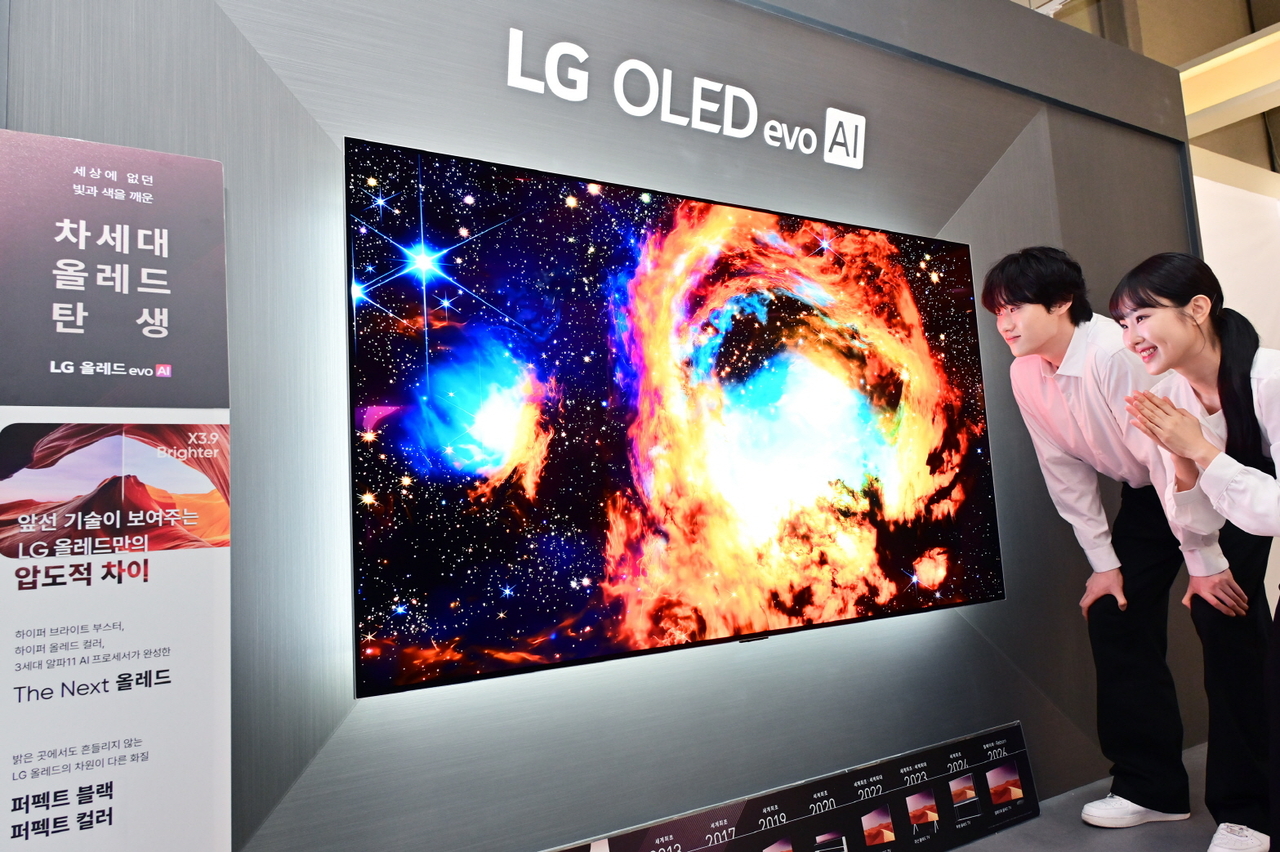
On the AI front, Samsung’s NQ8 AI and LG’s Alpha 11 processors use on-device AI to enhance picture and sound, including upscaling lower-resolution content and optimizing audio in real time.
Platform expansion is also accelerating. Samsung TV Plus and LG’s webOS are driving advertising- and subscription-based revenue, moving beyond one-off hardware sales while strengthening customer lock-in.
The companies are also leveraging home connectivity. Samsung’s SmartThings and LG’s ThinQ position TVs as central hubs controlling connected appliances, an area Chinese rivals may find harder to match.
Industry sources say such differentiated experiences could help defend market leadership against the Sony-TCL alliance.
“The combination of Sony’s premium brand and TCL’s manufacturing strength is clearly a threat,” the source said. “The market is shifting from device sales to platform competition, making lineup strategy more critical than ever.”
By Jie Ye-eun (yeeun@heraldcorp.com)

