




China’s first humanoid robot IPO offers reality check on valuations ahead of Boston Dynamics’ Nasdaq push
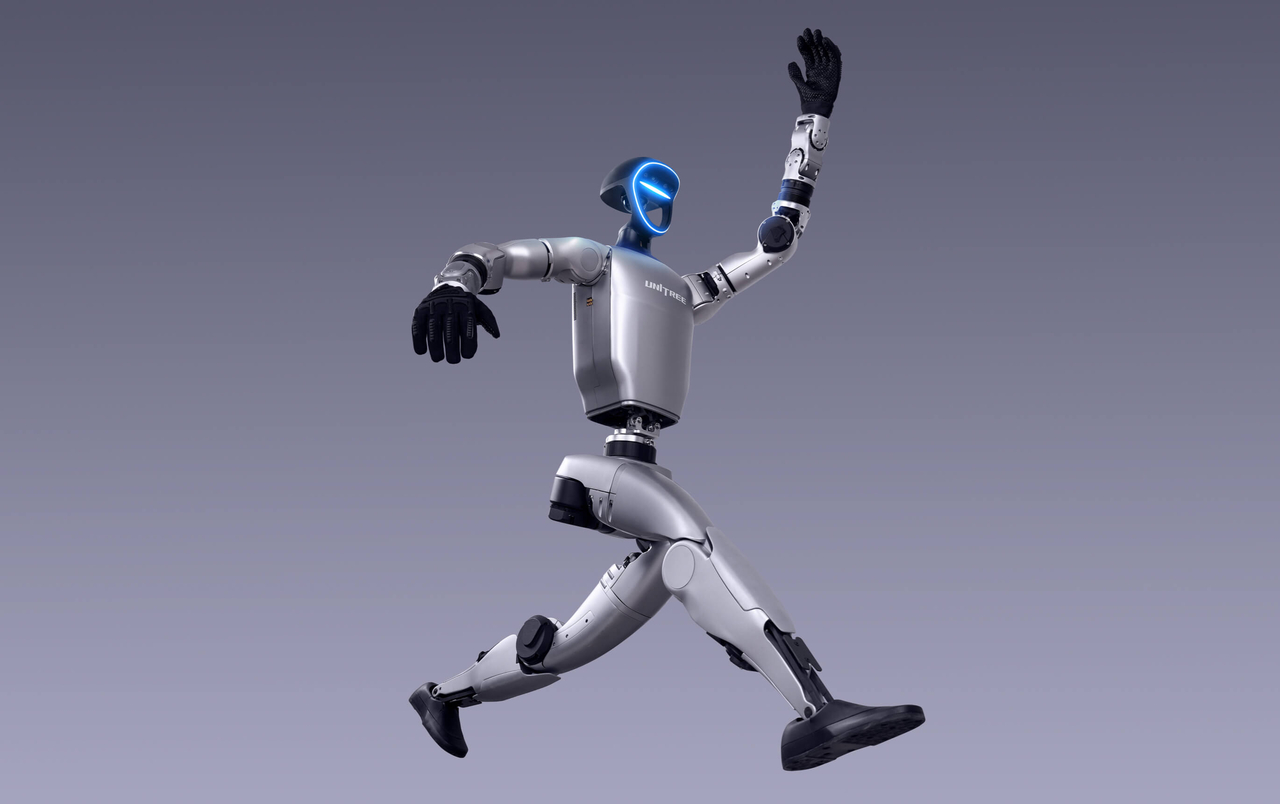
China’s leading humanoid robotics company is accelerating plans for an initial public offering on the Shanghai Stock Exchange, widely seen as the world’s first listing of an advanced humanoid robot maker.
Unitree Robotics' debut would not only mark a milestone for China’s humanoid robotics ecosystem but also set a benchmark for corporate valuation in this rapidly expanding sector.
For competitors such as Hyundai Motor Group’s US-based robotics subsidiary Boston Dynamics, which is gearing up for a Nasdaq listing, Unitree’s public debut could offer the first tangible reference point for whether the current surge in humanoid robotics reflects a sustainable growth trajectory or an overheated bubble.
A historic listing
According to Reuters, Unitree Robotics, the Hangzhou-based startup founded in 2016, filed for an IPO on the Shanghai Stock Exchange last week, aiming to raise 4.2 billion yuan ($610 million). If successful, it would rank among China’s largest domestic tech listings and make Unitree the first pure-play humanoid robotics firm on its mainland exchanges.
While Hyundai Motor Group and Boston Dynamics target an annual production capacity of 30,000 Atlas humanoid robots by 2028, Unitree Robotics has already gained an early lead. The Chinese company shipped more than 5,500 units last year and claimed a 32.4 percent share of the global humanoid robotics market.
Unitree’s operating income surged 335 percent year-on-year to 1.7 billion yuan last year, and net profit skyrocketed 674 percent to 600 million yuan, with a 62.9 percent margin. This sits far above that of Boston Dynamics, which remains unprofitable, and Tesla’s 18 percent.
Industry watchers suggest Unitree’s strategic pivot from quadruped robots to humanoids has been a key factor behind its growth. From January to September last year, humanoid robots accounted for 51.5 percent of its total revenue.
Reality check
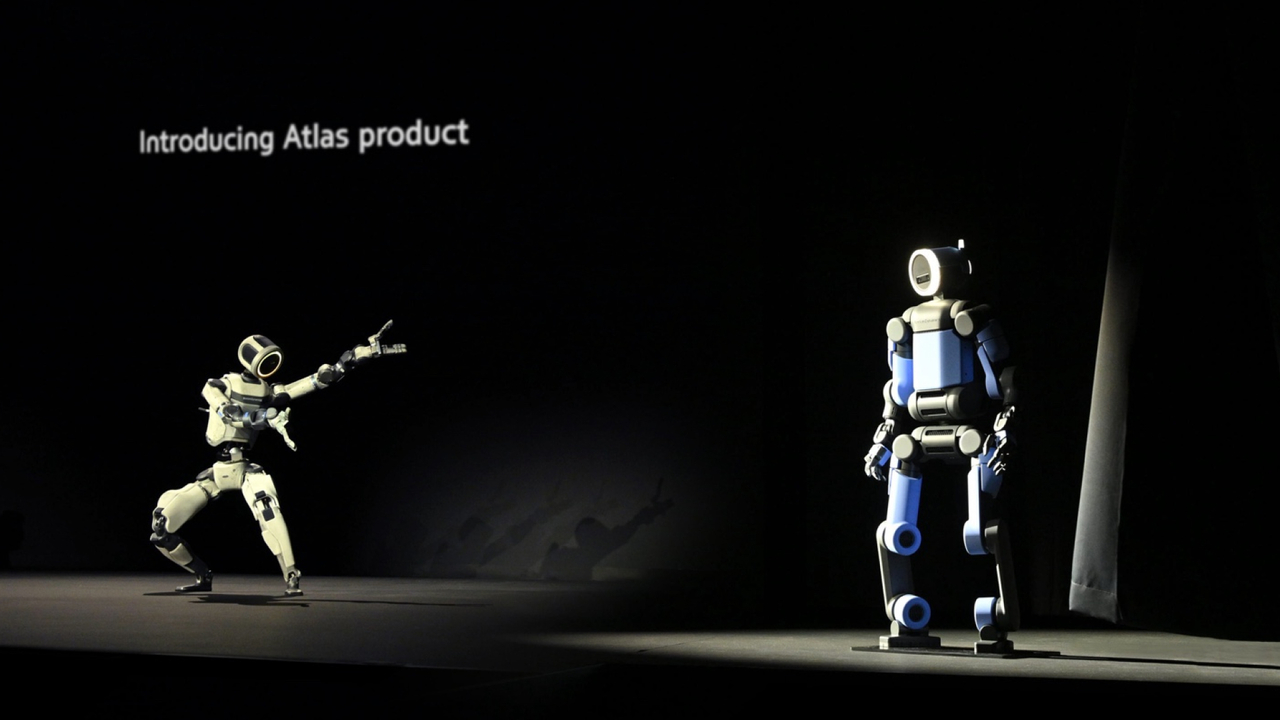
Experts say Unitree’s listing could have significant implications for Boston Dynamics; it would provide the first transparent benchmark for valuing a humanoid robotics company, with Unitree’s valuation estimated at up to $7 billion.
Park Cheol-wan, an automotive engineering professor and former vice chairman of the Korea Association of AI Robot Industry, noted, “For now, Unitree Robotics is effectively the first to reach the IPO stage. Second- and third-wave entrants such as Boston Dynamics will be heavily influenced by how Unitree is valued after its listing — so much so that their success or failure could hinge on it.”
Unitree is expected to use the IPO proceeds to scale its business.
“The company will need to demonstrate performance within one to two years and deliver meaningful financial results over the following three to five years,” said Park.
Boston Dynamics is valued on the private market at around 30 trillion won ($20 billion), with some estimates projecting as much as 100 trillion won — about three to 10 times higher than Unitree.
Park said the US robotics firm’s valuation “appears inflated” compared with Unitree, given its current technological direction and commercialization timeline.
“Boston Dynamics is unlikely to deliver meaningful, visible results before 2030. If it seeks to go public earlier — relying primarily on its long-term vision without near-term earnings visibility — a lower valuation would be more realistic.”
While details on the company’s IPO plans remain undisclosed, media reports project its Nasdaq listing by next year.
Park noted that, from a valuation standpoint, Unitree Robotics is underpinned by the scale and momentum of China’s humanoid robotics market. By contrast, Boston Dynamics — likely focused on the US and European markets — operates in a less favorable environment.
China’s EV playbook extends to robots
Industry watchers say Unitree’s rapid expansion has raised the possibility of replicating China’s dominance in the battery electric vehicle sector. However, the technology has yet to reach the level of sophistication required for advanced manufacturing — leaving room for latecomers such as Boston Dynamics to establish a competitive edge.
A robotics researcher at a state-run institute said, “While China’s extensive government support for advanced industries provides Unitree with a powerful tailwind, large-scale deployment of high-end manufacturing robots — also targeted by Hyundai Motor and Boston Dynamics — has yet to materialize.”
According to Unitree’s prospectus, 50-70 percent of current industrial application revenue from humanoid robots comes from reception and guided tour roles. The remaining share comes from smart manufacturing and inspection.
The company has also been expanding sales of its budget-friendly G1 model, launched in 2024 at around $16,000. The researcher noted that if Unitree continues to pursue a “high-volume, low-margin strategy” to scale both at home and abroad, it could pose a significant threat to Boston Dynamics, which is projected to sell Atlas units for $130,000 each.
‘It all comes down to physical AI’
In the end, the race in advanced manufacturing humanoids will be decided by how effectively physical AI is embodied within the machine. This remains a key area where Boston Dynamics still has room to secure its technological lead over Unitree and justify its premium positioning.
The researcher noted that while Unitree’s visual spectacle — martial arts and dance performances — showcase impressive motion control and balance, the real test lies in whether such robots can perform at human levels in industrial settings. Ultimately, the challenge comes down to the “brain.”
This is where Boston Dynamics is placing its bet. At CES 2026, the company unveiled a strategic partnership with Google DeepMind, outlining plans to integrate Gemini Robotics into its Atlas platform to co-develop advanced capabilities in control, reasoning and human interaction. The move signals a shift toward machines powered by “advanced general intelligence” — robots that think and adapt in real time.
Park said the humanoid robotics industry remains in an exploratory phase when it comes to physical AI integration.
“As breakthroughs in artificial general intelligence and real-world AI applications accelerate, the sector is likely to reach another inflection point,” he said. “Ultimately, the missing piece of the puzzle is not hardware, but physical AI itself.”
By Byun Hye-jin (hyejin2@heraldcorp.com)

