




Tech giant expands into AI-driven B2B sectors including data center cooling, smart factories, home solutions
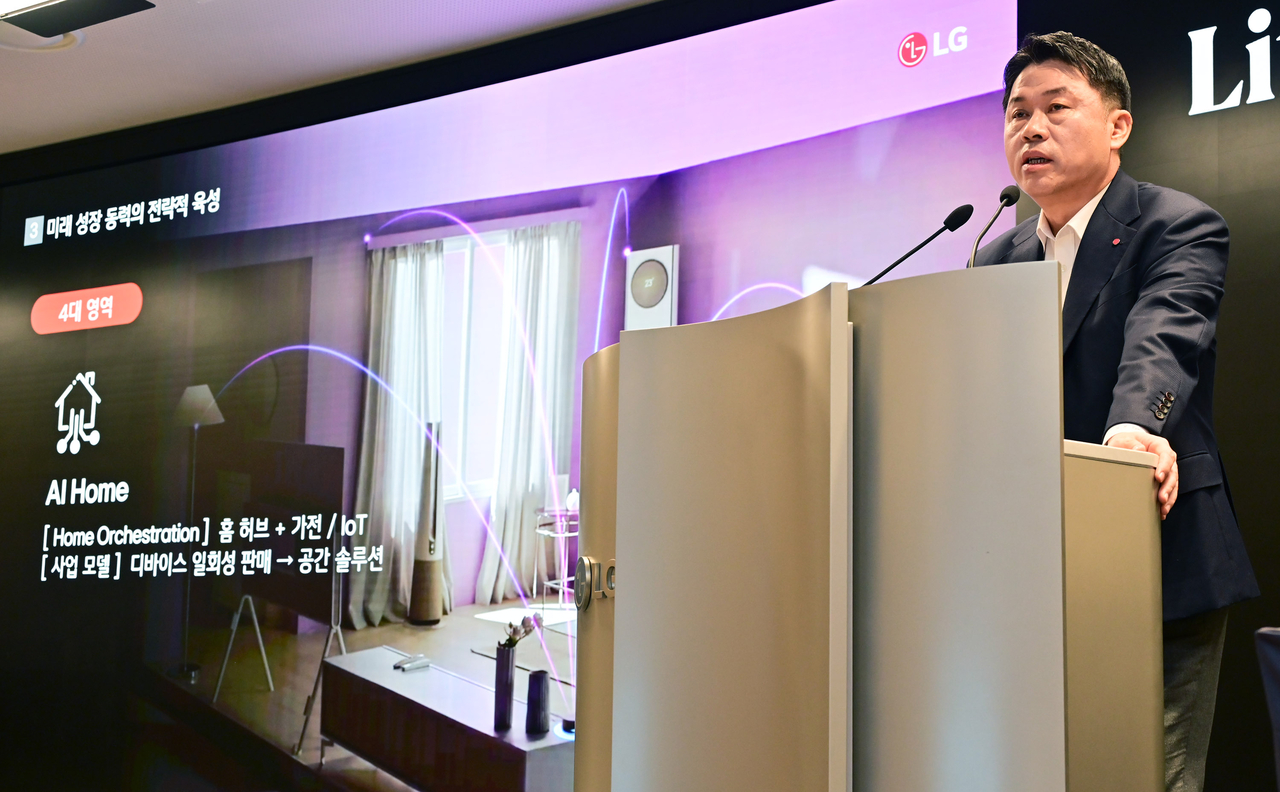
LG Electronics CEO Lyu Jae-cheol said Monday the company will make 2026 a pivotal year for its robotics business, stepping up its business-to-business push and expanding into AI-driven sectors such as data center cooling, smart factories and home solutions.
Speaking at the firm’s 24th annual shareholders meeting at its Yeouido headquarters in Seoul, Lyu said LG Electronics would “completely scale up its robotics-related B2B business” as it looks to tap the fast-growing global robotics market.
He also expressed confidence in actuators — key components that function as the muscles of robots and account for more than 40 percent of production costs — calling them a cornerstone of LG’s strategy.
“Based on our home appliance motor technology and mass-production infrastructure capable of producing 45 million units annually, we will establish ourselves as a key supplier in the robot actuator market,” Lyu said.
LG aims to leverage its hardware capabilities to secure an early foothold in a robotics components market expected to grow into tens of billions of dollars.
Lyu outlined four strategic directions to secure future growth engines: widening the technology gap in core businesses, focusing on high-margin segments such as B2B and subscription models, fostering new growth drivers including robotics and AI, and driving an AI transformation across the organization.
Beyond robotics, he pointed to AI data center cooling solutions, smart factory platforms and AI-powered home systems as key next-generation businesses.
“By combining our unmatched manufacturing capabilities with AI solutions, we will maximize synergies,” he said.
Lyu emphasized company-wide adoption of artificial intelligence to redesign work processes, aiming to improve productivity by more than 30 percent over the next two to three years.
To meet rising demand for AI data centers, LG plans to strengthen next-generation cooling technologies, including liquid cooling systems, and expand data center construction projects in collaboration with its affiliates.
The company is also scaling up its smart factory business. It plans to leverage existing orders worth hundreds of millions of dollars to expand manufacturing AI solutions into a global B2B offering.
In its home appliance segment, LG aims to evolve toward an AI home ecosystem. Lyu said the company will move beyond simple device connectivity.
“We will implement home orchestration that understands daily life patterns and automatically optimizes the environment,” he said, adding that the company will expand into broader space-based solutions through an open ecosystem.
LG said the gains would come from AI-driven design automation, improved development efficiency and organizational innovation, cutting costs while enhancing execution.
At the Monday meeting, all agenda items — including approval of financial statements, amendments to the articles of incorporation and director appointments — were passed as proposed.
The company approved a 35 percent increase in dividends, raising the payout from 1,000 won ($0.66) to 1,350 won per common share. It also authorized the full cancellation of 6,442 treasury shares acquired during past corporate restructuring.
Lyu, who assumed the CEO role in November last year, was newly appointed as an internal director, while professor Seo Seung-woo of Seoul National University’s department of electrical and computer engineering was reappointed as a member of the audit committee.
By Jie Ye-eun (yeeun@heraldcorp.com)

