




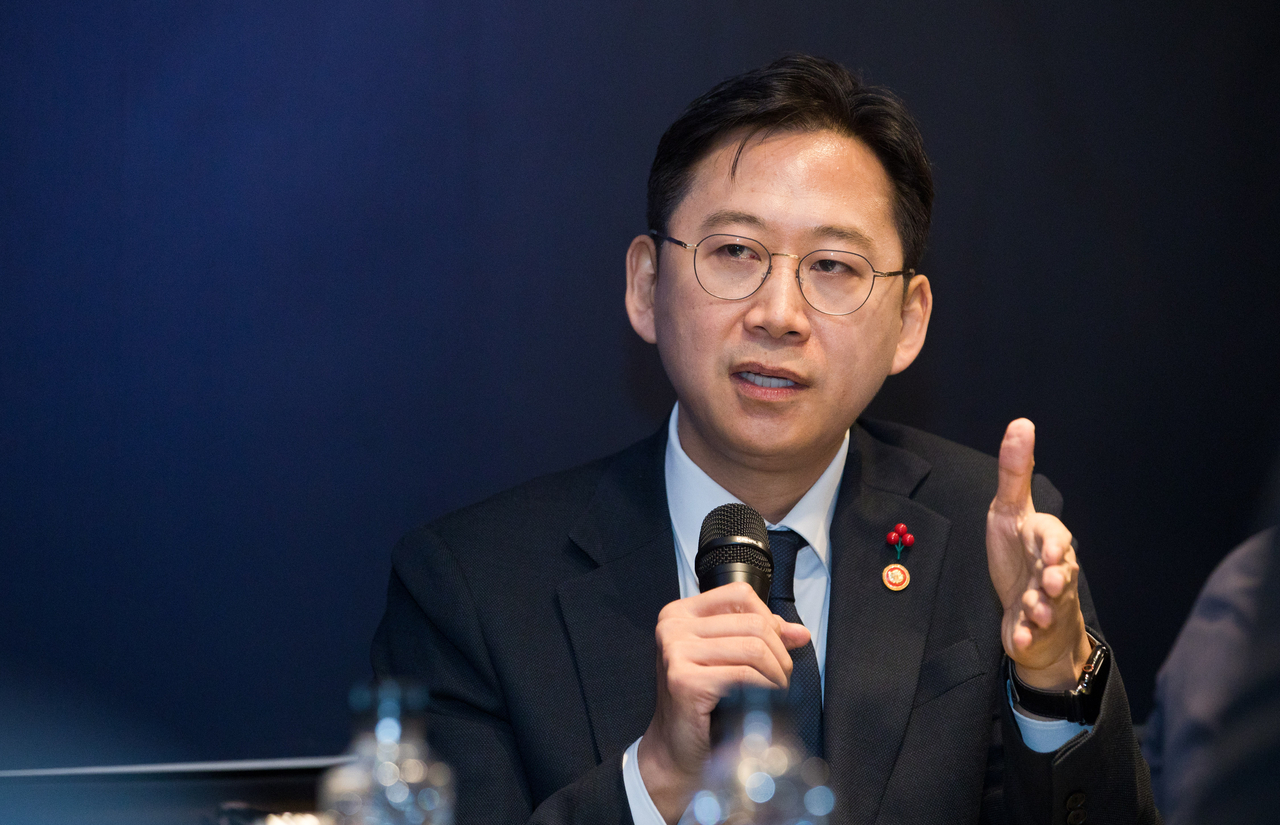
South Korea will officially begin full-scale construction of its national artificial intelligence ecosystem in 2026, marking a shift from planning to execution, Science and ICT Minister Bae Kyung-hoon said Monday.
Speaking at a press conference in Sejong, Bae said Korea’s AI policy is moving beyond budget restoration and infrastructure groundwork toward delivering visible, measurable outcomes.
“Up to now, we focused on securing resources and rebuilding foundations,” he said. “From next year, execution and results must follow.”
At the center of the strategy is a rapid expansion of AI computing capacity. The government plans to secure 52,000 high-performance GPUs by 2028, scaling up to 260,000 by 2030 through joint public-private investment. Bae said domestic companies have responded positively, signaling stronger coordination between government and industry.
Still, he cautioned that even those targets may prove insufficient, citing rising demand and growing interest from global partners seeking AI collaboration with Korea.
Bae also stressed AI’s role as a cross-disciplinary engine, particularly in biotechnology, quantum science and next-generation communications. As part of that push, 2026 will see the launch of a new AI-driven research model dubbed the “co-scientist” framework, in which AI acts as an active participant in scientific discovery rather than a supporting tool.
Rejecting claims that AI investment is overheated, Bae said, “AI is not a bubble.” He acknowledged that high infrastructure and data costs have discouraged private-sector participation in the past, but said the government’s large-scale GPU procurement would serve as a turning point.
Under the plan, the state will act as a “priming pump,” supporting companies developing AI servers and platforms powered by domestically produced chips, while helping them expand overseas.
The minister also flagged the need for a major upgrade in digital infrastructure, saying Korea’s existing 5G network will be insufficient for an AI-intensive economy. Full-scale investment in 6G technologies, jointly funded by government and industry, will begin in 2026.
“AI-driven innovation across industry, communications and research will become the backbone of national growth,” Bae said. “Next year will be the turning point when we move from vision to reality.”
Later Monday, the Presidential Council on National Artificial Intelligence Strategy, the government’s top AI policymaking body, unveiled its proposed 9.9 trillion won ($6.7 billion) budget for 2026, with 47.7 percent allocated to new initiatives aimed at strengthening AI infrastructure and capabilities.
The committee also announced the completion of a National AI Action Plan. Drafted over the past 100 days, it outlines 98 initiatives spanning infrastructure, talent development, regulatory reform and cybersecurity modernization. Key measures include real-time security inspections using white-hat hackers, AI-based preventive welfare programs and the migration of public systems to private cloud platforms.
Public feedback on the draft plan will be collected through Jan. 4, with a final version set to be confirmed at the committee’s second plenary meeting.
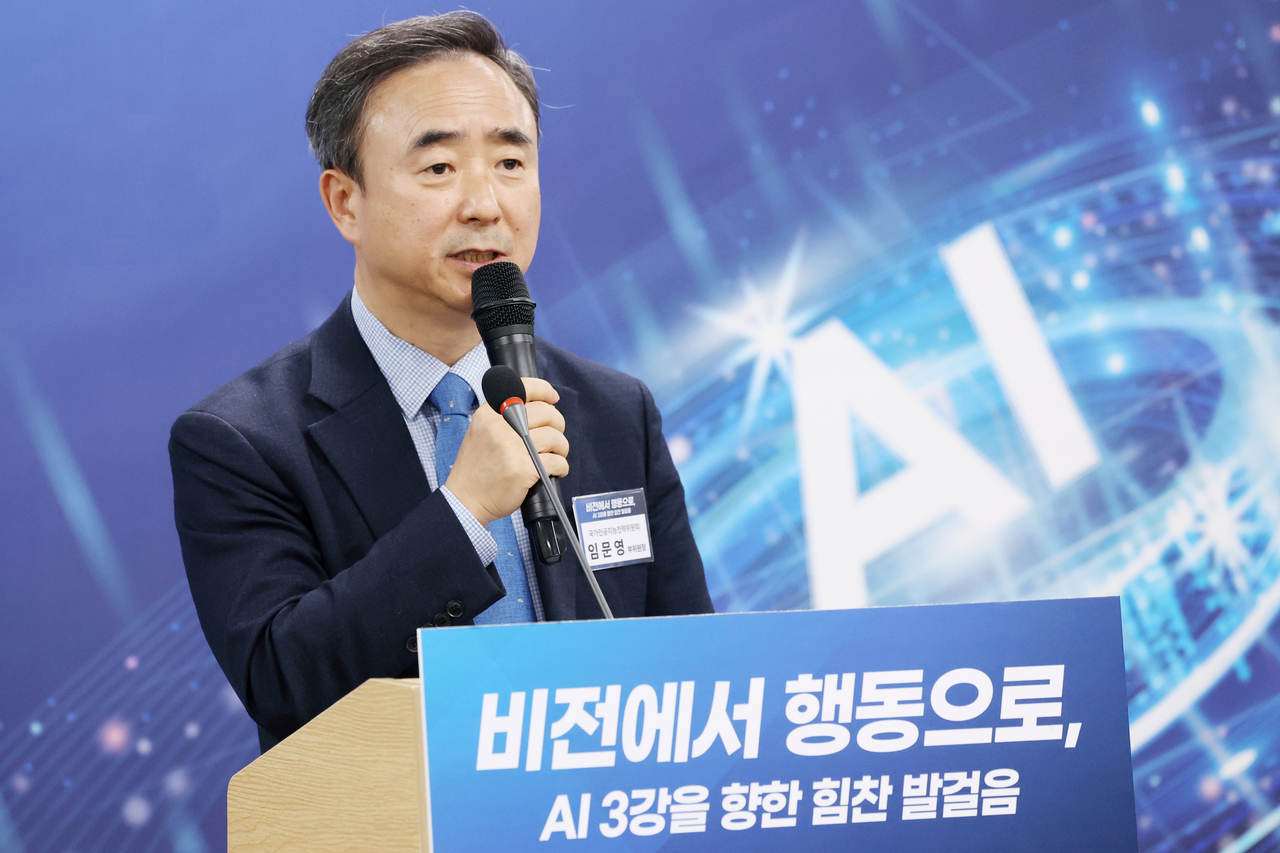
Meanwhile, Lim Mun-yeong, standing vice chairman of the council, said that it is not appropriate to call for a slowdown in AI regulation when the legislative process is already underway.
Korea is set to become the first country in the world to fully implement an AI regulatory framework, with the new Basic Act on AI coming into force on Jan. 22. The legislation represents the nation’s first comprehensive legal framework on artificial intelligence, aiming to foster industry growth while ensuring safety and public trust.
“We will closely monitor the rollout of the Basic Act on AI,” Lim said in a press conference in Seoul. “If challenges emerge, we will listen to public feedback and consider revising the legislation accordingly.”
By Jie Ye-eun (yeeun@heraldcorp.com)

