




Cross-border programs to boost Korean startup expansion in Southeast Asia
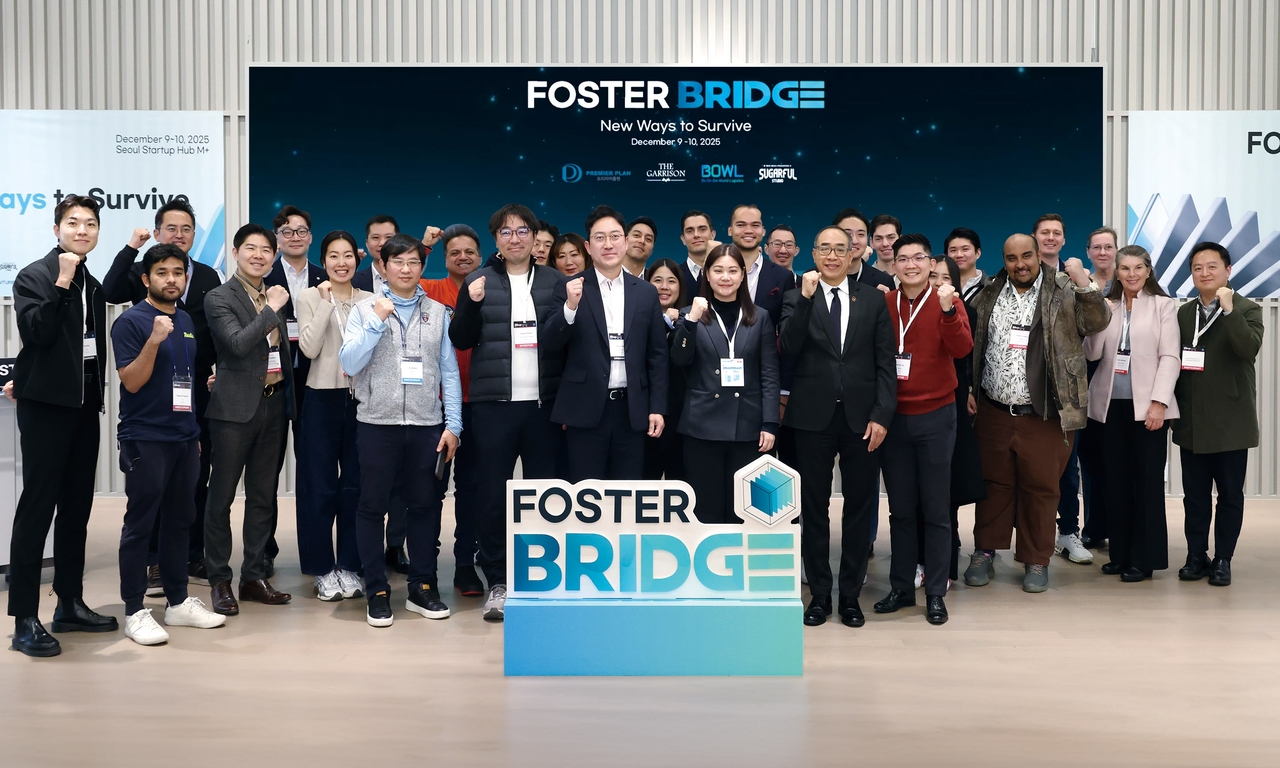
As early-stage investment activity in Korea continues to slow, Korean public and private sector actors are turning to Southeast Asia as a partner in ecosystem building.
This shift was on display at the FosterBridge 2025 forum, a two-day startup and investment event held this week at Seoul Startup Hub M Plus. While the event featured global investors from more than 20 countries, the most concrete outcome was a new partnership between Korea’s FosterBridge platform and Thailand’s Techsauce, one of Southeast Asia’s leading innovation and startup ecosystem builders.

The two organizations signed a memorandum of understanding on Tuesday to co-develop cross-border startup programs and expand investment and business-matching channels between Korea and Thailand. Thai Ambassador to South Korea Tanee Sangrat was present for the signing.
Oranuch Lerdsuwankij, CEO of Techsauce, said in a keynote speech that Thailand is actively seeking partnerships with Korean startups in sectors such as food tech, health tech, AI-driven manufacturing and climate-related technologies.
In an interview with The Korea Herald, she said Thai corporations are “looking for new S-curves” and see Korean startups as potential solution providers.
Techsauce operates Thailand’s national food tech accelerator in partnership with Mahidol University and the National Innovation Agency, and also hosts the Techsauce Global Summit, which drew over 18,000 participants from 60 countries last year. Korean startups already exhibit regularly at the summit and Lerdsuwankij expects that presence to grow under the new agreement.
Beyond the MOU, the schedule was filled with reverse-pitch sessions — where global investors present their programs to domestic startups. Participating firms included accelerators Brinc from Hong Kong and FundingBox from Europe, and Intel’s innovation scouting team.
“Rather than just pushing startups to go overseas, the goal now is to bring investors and partners into Korea,” said FosterBridge chair Park Jin-hyun. “The partnership with Thailand is one example of how we’re shifting toward more mutual engagement.”
Korea’s domestic venture funding has declined for the second consecutive year, with early-stage deals hit particularly hard. In response, government agencies are ramping up internationalization efforts. An official from Korea Institute of Startup and Entrepreneurship Development outlined new initiatives including the Startup Korea Special Visa, a fast-track immigration program for foreign entrepreneurs based on a business plan, and the upcoming K-Startup Global Hub, a 12-story facility under construction in Seoul’s Mapo District that is set to open in 2026.
Still, structural challenges persist. Korean startups are recognized for strong technical execution, but few have successfully localized their products in Southeast Asia. One notable exception that Lerdsuwankij cited is Line Man Wongnai, whic is a Thai food delivery and services platform co-founded through a joint venture involving Line Corporation, itself affiliated with Korea’s IT giant Naver. The company's valuation exceeded $1 billion in late 2022.
She said this kind of JV model may be more viable than standalone market entry. “Some Korean companies don’t need to set up operations directly. They can co-invest in Thai startups or establish local partnerships. Thailand can be a regional base for ASEAN,” she said.
The FosterBridge forum concludes Wednesday with investor-startup matchmaking and sessions featuring startup support agencies from Japan and Taiwan.
Organizers confirmed that discussions are underway to co-host the next edition of the event in Bangkok in 2026.
By Moon Joon-hyun (mjh@heraldcorp.com)

